AI Scribe for Telehealth-Only Practices: Why It's the Best-Fit Use Case
Telehealth-only practices get the strongest benefit from AI medical scribes, and the workflow choices that make it work well differ from in-person practice.

By Fatih Aktas, Founder & CEO
Published
Why telehealth is the sweet spot
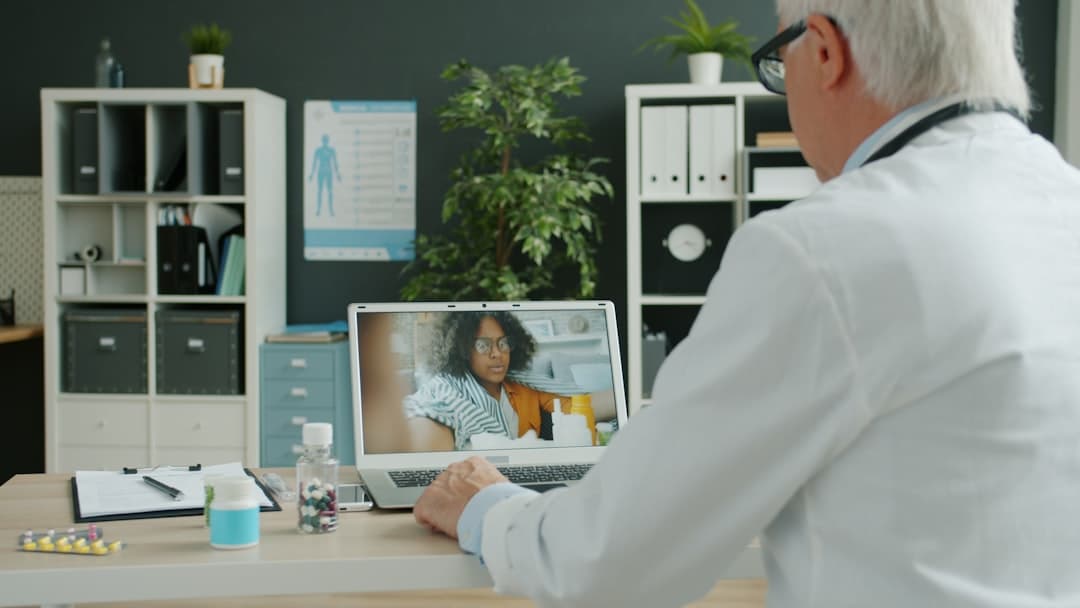
AI scribes work better in telehealth than in any other practice setting. The audio is clean, the visit structure is predictable, the workflow has fewer interruptions, and the patient is already accustomed to the technology layer.
Practices that are 100% telehealth typically see the largest time savings, the highest adoption rates, and the lowest friction in AI scribe rollouts. Hybrid practices see strong results on their telehealth visits and somewhat less on their in-person visits.
This article is about why telehealth is the best-fit case and what telehealth-only or telehealth-heavy practices should know about adoption.
Why the audio is better
The audio quality on a typical telehealth visit is fundamentally cleaner than a typical office visit. The reasons:
No HVAC, no hallway noise, no waiting room sounds. The patient is in their home or office, where ambient noise is usually lower than in a clinic.
Both speakers are on their own audio device. The provider's laptop captures their own voice cleanly; the patient's laptop or phone captures theirs. There's no four-foot gap with both voices competing for the same room mic.
Compressed-but-controlled audio. Telehealth audio is compressed by the platform (Zoom, Doxy, etc.) but the compression is consistent. AI scribes have learned to handle this; the consistent quality is better than the variable quality of room audio.
Echo cancellation is built in. Telehealth platforms have echo cancellation that removes audio artifacts an office room mic would capture.
The result: AI scribe accuracy on telehealth visits typically runs 3 to 5 percentage points higher than on in-office visits with the same patient.
Why the workflow is better
Beyond audio, the telehealth workflow itself fits AI scribes better:
The visit has a clear start and end. The Zoom link opens, the visit happens, the link closes. The recording knows when to start and stop without ambiguity.
The provider is at their desk. No moving around the exam room, no breaks for the physical exam, no stepping out to grab supplies. The cognitive context for the AI is steady.
The provider is already focused on the screen. The note review can happen on the same screen the visit happened on, without a context switch.
The next visit is one click away. Point-of-care signing fits naturally because the visit just closed and the next one hasn't opened yet.
These features make the workflow more amenable to AI scribe integration than the in-person workflow with its physical movement, supply gathering, and interruptions.
The specific time savings pattern
Telehealth practices typically see:
- In-visit documentation time: down from 3 to 5 minutes per encounter to 1 to 2 minutes
- End-of-day catch-up time: down from 30 to 60 minutes to near zero
- Point-of-care signing rate: above 95% within the first month
- Daily total time recovered: 60 to 120 minutes per provider
These numbers are at the high end of what AI scribes deliver in any setting. The same provider doing in-person work might see 60 to 90 minutes recovered, not 60 to 120.
The consent conversation in telehealth
The patient consent script for telehealth needs a small adjustment. The patient can't see the laptop you're using; they need explicit verbal acknowledgment that recording is happening.
A version that works:
"Hi [patient name], thanks for being here today. Before we start, I'd like to mention that I use a tool that helps me take notes during our visit. It listens and drafts the note for me. The audio is processed by a secure service and the recording is deleted after the note is written. Is it okay with you if I use it today?"
A few specific telehealth considerations:
The recording is happening on the provider's end, not the platform's. Some patients assume telehealth platforms record by default. Clarify that this is a separate tool, not the platform's recording feature.
The patient can leave a telehealth visit more easily than an office visit. If they're uncomfortable, they can click "leave meeting" without the social friction of leaving an exam room. The consent script should be calm and unrushed; pressure backfires more in telehealth than in person.
Body language is harder to read. Patient hesitation in person is visible; in telehealth, it's more easily missed. Listen for verbal hesitation more carefully and don't push if there's any.
Visit types that fit telehealth + AI well
A few visit categories where the telehealth + AI scribe combination is especially valuable:
Behavioral health follow-ups. Long visits (30 to 60 minutes), conversation-heavy, high documentation burden. The combination saves substantial time, often 20 to 30 minutes per visit.
Chronic disease management. Diabetes, hypertension, COPD follow-ups. Predictable structure, focused content. AI scribes handle these well; the visits often fit in 15-minute slots with full documentation captured.
Medication management visits. Psychiatric medication management, hormone replacement follow-ups, weight management. Structured, focused, with clear plan content.
Brief urgent care visits (low acuity). UTIs, minor infections, prescription refills, allergy management. Quick visits where AI scribe documentation prevents the patient from feeling rushed while still completing the chart in real time.
Wellness coaching and counseling. Nutrition, lifestyle modification, smoking cessation. Conversation-heavy without clinical complexity.
Visit types that fit telehealth + AI less well
A few categories where the telehealth + AI scribe combination is harder:
Visits requiring observation of the patient's environment. Home safety evaluations, certain mental status assessments where the patient's living space matters. The AI captures what's said, not what's observed.
Visits with a physical demonstration the patient is asked to perform. Range-of-motion assessment, certain neurological screening. The provider is watching, not talking; the AI may have limited content to capture.
Visits with technical difficulties. Audio drops, video freezes, intermittent connectivity. The AI scribe is recording but the visit is fragmented. The note may have gaps that need manual filling.
Visits where the patient is in a noisy environment. A patient calling from a busy office, a car, or an environment with multiple people audible. The AI's accuracy degrades.
Visits with family members in the patient's room on the patient's end. Multi-speaker handling on the patient's audio channel becomes complicated.
For most telehealth practices, the visit types that fit the model represent the bulk of the schedule. The visit types that don't fit are a minority and can be flagged for typed documentation when they come up.
The practice management implications
A telehealth-only practice using AI scribes can run differently from a traditional practice:
Higher visit volume per provider. With documentation off the provider's plate, more visits per day are feasible. Some telehealth practices have increased per-provider visit counts by 15 to 25% after AI scribe adoption, without provider burnout increasing.
Faster post-visit follow-up. Notes signed at point of care mean follow-up actions (lab orders, prescription sends, patient instructions) can happen immediately rather than at end of day. Patients receive their plan faster.
Better quality reporting. Documentation that's more thorough and consistent supports better quality reporting to payers and quality programs.
Lower overhead. A telehealth-only practice already runs lean (no exam room, no rooming staff). The AI scribe reduces the documentation overhead too, leaving the provider's time as the primary cost.
Vendor considerations for telehealth
Most AI scribe vendors handle telehealth well. A few things to verify:
Integration with your telehealth platform. Some AI scribes integrate directly with Zoom, Doxy, Spruce, etc., to start and stop recording automatically. Others run as a separate tool you manually start. Direct integration is smoother.
Compatibility with your EHR. The provider workflow is laptop-based; the AI scribe needs to push notes into the EHR cleanly. Verify the integration works for the specific EHR you use.
Audio capture from telehealth. Some platforms capture both sides of the conversation; some only capture the provider's side and rely on the platform's audio mixing. Verify the AI is hearing both the provider and the patient clearly.
Handling of recorded telehealth platforms. If your telehealth platform is also recording (some do for quality purposes), the AI scribe and the platform's recording can stack. Decide which one is the authoritative recording.
The case for telehealth-first practices
For new practices starting telehealth-first, adopting an AI scribe from day one is straightforward. The training period is shorter, the friction is lower, and the workflow benefits accrue immediately.
For traditional practices considering a telehealth pivot or expansion, AI scribes are part of what makes telehealth economically viable. The combination of telehealth's lower overhead and AI scribe's lower documentation burden makes provider-time the dominant input; everything else is a fraction.
For hybrid practices (mix of telehealth and in-person), expect different time savings on each. The telehealth visits are easier wins; the in-person visits are still positive but take more workflow discipline.
The honest summary
AI scribes were designed for in-person ambulatory care but turn out to work even better in telehealth. The audio is cleaner, the workflow is steadier, the consent is similar but simpler, and the time savings are at the high end of what the technology delivers.
For practices that are heavily or entirely telehealth, the adoption decision is essentially settled in favor of AI scribes. The question is which vendor, not whether to adopt. For hybrid practices, telehealth is the easy starting point; in-person can follow once the workflow muscle has been built.
The pattern that's emerged across the telehealth-heavy practices that adopted AI scribes early: they don't talk about it as a feature anymore. It's just part of how their practice runs. The integration is invisible. That invisibility is the goal.
For the broader workflow integration, see the first-week onboarding plan. For the after-hours time recovery that's especially pronounced in telehealth, the after-hours hour covers what changes when documentation comes off your evening.
Articles connexes
Six Months In: What to Re-evaluate About Your AI Scribe Setup
A structured six-month review of your AI medical scribe rollout, covering what to recalibrate, what to renegotiate, and what to retire to keep the workflow healthy long-term.
Practice ManagementThe First Week with an AI Scribe: A Day-by-Day Onboarding Plan
A grounded day-by-day plan for the first week of using an AI medical scribe in clinical practice, covering setup, calibration, and the workflow choices that determine whether it sticks.
Practice ManagementWhen AI Scribes Slow You Down: The First Two Weeks Slump and How to Push Through
The honest truth about adopting an AI scribe: weeks one and two often feel slower than your old workflow. Here is why, what to expect, and when to push through.
Related Resources
Prêt à essayer la documentation propulsée par l'IA?
Rejoignez des milliers de professionnels de la santé qui économisent des heures chaque jour avec Transcribe Health.
Essai gratuit