
Documenting GLP-1 and Weight-Management Visits With an AI Scribe
GLP-1 prescribing has reshaped primary care visits. Here is how an AI scribe captures the dosing, monitoring, side effects, and prior-authorization detail these encounters demand.

By Fatih Aktas, Founder & CEO
Published

A new kind of visit, every day
GLP-1 receptor agonists changed primary care faster than almost any drug class in recent memory. Semaglutide and tirzepatide turned weight management from a once-in-a-while conversation into a recurring part of the schedule for many clinicians. The visits are frequent, they follow a predictable arc, and they generate a surprising amount of documentation: titration history, weight trends, side effect monitoring, comorbidity tracking, and the ever-present prior authorization.
That combination, repetitive structure plus heavy detail, is exactly where an AI scribe earns its keep. But these visits also have specific documentation requirements that a generic note template handles poorly. This article walks through what a GLP-1 visit demands and how ambient documentation captures it.
What makes these visits documentation-heavy
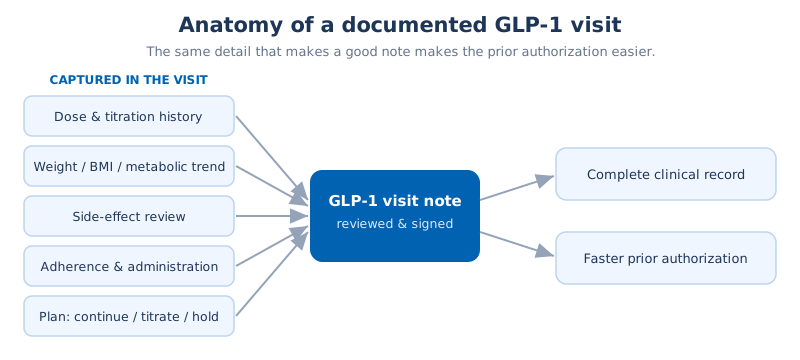
A weight-management follow-up is not a quick recheck. A thorough one touches several threads at once:
- Dose and titration history. Where the patient started, the current dose, when it was last increased, and whether the planned escalation is on schedule or paused for tolerance.
- Objective trend data. Weight and BMI over time, and often blood pressure, A1c, and lipid changes, because these medications affect more than the number on the scale.
- Side effect review. Nausea, vomiting, constipation, and the early-warning questions for the rare but serious concerns. The presence or absence of these drives the dosing decision.
- Adherence and administration. Whether the patient is injecting correctly and consistently, and any gaps caused by supply shortages or cost.
- The plan. Continue, titrate, hold, or stop, plus the lifestyle counseling that should accompany the prescription, not be replaced by it.
Capturing all of that by hand at the end of a packed day is how visits get under-documented. The titration rationale gets compressed to a single line, the side effect review gets dropped, and the note no longer tells the story the next clinician (or the payer) needs.
How an AI scribe captures the GLP-1 visit
Ambient documentation listens to the natural conversation and structures it, which fits these visits well because the relevant information surfaces in the dialogue.
It captures the titration narrative as it happens. When you say "we'll move you from 0.5 to 1 milligram since you've tolerated this dose for four weeks," that reasoning lands in the assessment and plan instead of being lost. The why behind a dose change is exactly the detail that thin notes omit and audits ask about.
It logs the side effect review without a checklist detour. As the patient describes mild early nausea that has since settled, the scribe records it. You do not have to break eye contact to tick boxes, and the review of systems reflects what was actually discussed.
It keeps the objective data attached to the decision. Paired with your EHR's flowsheets, the note can reference the weight trend and metabolic markers that justify continuing or adjusting therapy, so the clinical picture and the decision sit together.
It produces a clean patient summary. These patients often leave with instructions: how to escalate, what side effects warrant a call, when to come back. A scribe can generate a plain-language summary from the same visit, which improves adherence on a therapy where adherence is everything.
The prior authorization reality
No honest discussion of GLP-1 documentation skips prior authorization. Coverage for these medications is inconsistent, payers frequently require documentation of BMI thresholds, comorbidities, prior weight-loss attempts, and ongoing monitoring, and the paperwork burden is real.
A well-documented visit makes the prior authorization dramatically easier, because the justification the payer wants is the same clinical detail a good note already contains: the diagnosis, the qualifying measurements, the comorbid conditions, the documented monitoring plan. When the note captures all of that as a byproduct of the visit, you are not reconstructing the case from memory when the authorization request lands. We have written more broadly about how AI scribes support prior authorization, and weight-management therapy is one of the clearest examples of why thorough documentation upstream saves hours downstream.
A note on scope: the AI drafts the documentation. It does not determine medical necessity or decide coverage. The clinician's judgment about whether the therapy is appropriate, and the accuracy of the record supporting it, remain the clinician's responsibility.
Practical tips for these encounters
A few habits make AI-documented weight-management visits cleaner:
- Verbalize the dosing rationale. Saying the reasoning out loud ("holding the increase because of persistent nausea") both serves the patient and ensures the note captures the why.
- State the objective anchors. Mentioning the weight trend or relevant labs in conversation helps the note tie the plan to the data.
- Confirm medication names and doses clearly. GLP-1 agents have similar names and multiple strengths. Clear articulation reduces the chance of a transcription error on a detail that matters, and the review step exists to catch the rest.
- Review before you sign. The dose, the plan, and the side effect review deserve a careful read. These are the fields where an error carries real clinical weight.
The bigger picture
GLP-1 visits are a preview of a broader pattern: recurring, protocol-driven chronic care that generates structured documentation at volume. Whether it is metabolic medicine, hypertension management, or any other condition managed across frequent follow-ups, the documentation burden compounds with the visit count.
An AI scribe does not change the medicine. It changes how much of your day the medicine's paperwork consumes. For a clinician seeing a steady stream of weight-management follow-ups, that is the difference between charting until 7 PM and leaving when the last patient does.
Transcribe Health captures chronic-care visits across 30+ specialties with structured, review-ready notes and patient summaries. See it in action or try it free.
This article is for informational purposes only and is not medical advice. Prescribing, dosing, monitoring, and coverage decisions for GLP-1 therapies rest with the treating clinician. AI-generated documentation must be reviewed and signed by the responsible provider before entering the medical record.
Articles connexes
AI Medical Scribe for Primary Care: Documentation Guide
How AI medical scribes handle primary care documentation, from multi-problem visits to preventive care and chronic disease management.
Clinical WorkflowsAI Medical Scribe for IVF and Fertility Clinics
IVF documentation is complex, time-sensitive, and detail-critical. Learn how AI scribes handle cycle monitoring, egg retrieval notes, embryo transfer documentation, and fertility-specific workflows.
Clinical WorkflowsAI Medical Scribe for Allergy and Immunology Practices
Allergy and immunology documentation involves complex testing protocols, immunotherapy tracking, and detailed reaction histories. See how AI scribes streamline it all.
Prêt à essayer la documentation propulsée par l'IA?
Rejoignez des milliers de professionnels de la santé qui économisent des heures chaque jour avec Transcribe Health.
Essai gratuit