AI Medical Scribe for Pain Management Clinics
Pain management documentation requires detailed procedural notes, controlled substance tracking, and functional assessments. Learn how AI scribes handle the regulatory and clinical demands of pain medicine.

By Fatih Aktas, Founder & CEO
Published
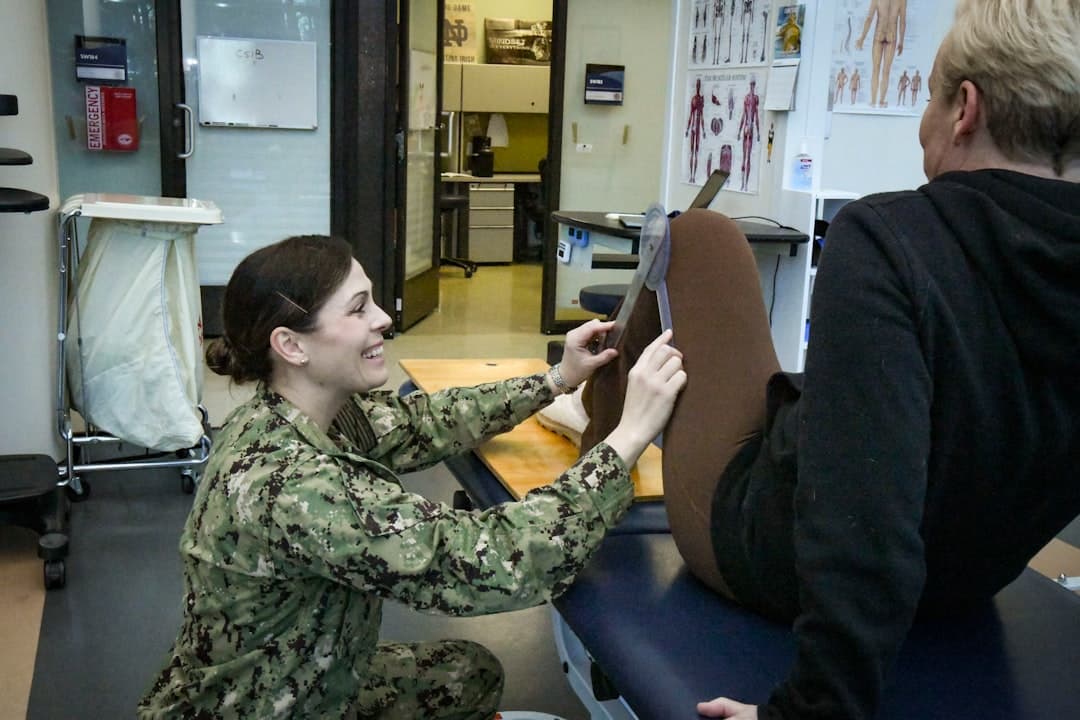
Pain management documentation carries more risk than most specialties
Pain medicine sits at the intersection of high regulatory scrutiny, complex clinical decision-making and insurance gatekeeping. Every note you write could end up in front of a DEA auditor, a malpractice attorney or a prior authorization reviewer. The stakes are different here than in most other specialties.
The DEA tracks prescribing patterns for controlled substances. State prescription drug monitoring programs (PDMPs) flag physicians whose opioid prescribing falls outside expected norms. Insurance companies demand documentation justifying every interventional procedure. And patients with chronic pain often have complex histories that span multiple providers, failed treatments and years of medical records.
Pain management physicians spend an average of 15-20 minutes per patient on documentation alone. That's not because they're slow. It's because the documentation burden in pain medicine is genuinely heavier than most specialties. A single follow-up visit might require updating pain scores, documenting a PDMP check, recording a urine drug screen result, reviewing a treatment agreement, assessing functional status and adjusting a multimodal treatment plan.
An AI scribe built for pain management can capture all of this from natural clinical conversation. But only if its trained to understand the specific documentation patterns that pain medicine demands.
Pain assessments and functional status documentation
Pain is subjective. Documenting it well requires capturing both the patients reported experience and the clinicians objective assessment. AI scribes need to handle both sides.
During a typical pain management visit, the physician covers several assessment domains verbally:
- Pain intensity: Numeric rating scale (NRS 0-10), visual analog scale, or FACES scale scores. When the doctor asks "what's your pain today" and the patient says "about a six, but it was an eight before the injection last month," the AI needs to capture the current score, the comparison and the temporal context.
- Pain characteristics: Location, quality (burning, aching, stabbing, radiating), frequency, duration and aggravating or alleviating factors. These details drive diagnosis and CPT code selection.
- Functional assessments: Oswestry Disability Index scores, Roland-Morris questionnaire results, or simply the physicians observations about how pain affects daily activities. "She says she can walk about two blocks now before needing to stop" is functional data that belongs in the note.
- Treatment response: Whether current medications, injections or therapies are providing relief and to what degree. Percentage improvement is commonly referenced. "He reports about 60% relief from the medial branch blocks" is a data point the AI must capture precisely.
The AI structures these into the assessment portion of the note, linking them to treatment goals the physician established at prior visits. This creates the longitudinal documentation trail that regulators and payers expect to see.
Controlled substance documentation and treatment agreements
No area of pain management documentation carries more legal weight than controlled substance prescribing. A missed PDMP check or an undocumented treatment agreement can trigger a DEA investigation, board complaint or malpractice claim.
AI scribes capture the following elements when the physician discusses them during the encounter:
PDMP verification: When the physician says "I checked the PDMP this morning, no fills from other providers, last fill was 28 days ago at Walgreens," the AI documents the check, findings and date. Many states now mandate PDMP checks at every visit where controlled substances are prescribed. Missing documentation of that check is a compliance gap.
Urine drug screen results: The physician reviews UDS results verbally. "Urine tox is consistent with prescribed medications, positive for oxycodone and negative for illicit substances." The AI captures which substances were positive, which were negative and whether results were consistent with the treatment plan.
Informed consent and treatment agreements: Pain management practices typically require patients to sign opioid treatment agreements. The AI documents when these are reviewed, renewed or when the physician discusses terms with the patient. "We reviewed the controlled substance agreement today, patient understands the terms including single pharmacy and no early refills."
Pill counts and medication reconciliation: When the physician mentions "pill count is correct, 14 remaining of 30 dispensed on the 1st," the AI captures this as part of the monitoring documentation.
| Documentation element | Regulatory requirement | AI capture method |
|---|---|---|
| PDMP check | Required per state law (most states) | Verbal confirmation by physician |
| Urine drug screen | Standard of care, payer requirement | Lab result discussion during visit |
| Treatment agreement | DEA best practice, state mandates | Verbal review confirmation |
| Pill count | DEA best practice | Verbal count during visit |
| Risk stratification | Opioid Risk Tool (ORT) score | Discussed during new patient intake |
This documentation feeds directly into compliance and audit readiness. When a chart is pulled for review, every controlled substance visit needs to show a consistent pattern of monitoring, assessment and clinical justification.
Interventional procedure notes
Pain management is increasingly interventional. Epidural steroid injections, facet joint injections, medial branch blocks, radiofrequency ablations, spinal cord stimulator trials and implants, intrathecal pump placements. Each generates a procedure note with specific requirements.
AI scribes handle interventional documentation in two phases:
Pre-procedure documentation captures the indications, consent discussion, timeout verification and patient positioning. When the physician walks through the timeout verbally, "confirming patient identity, procedure is a right L4-L5 transforaminal epidural steroid injection, allergies reviewed, no anticoagulants, consent signed," the AI builds structured pre-procedure documentation from that single verbal sequence.
Intra-procedure documentation captures the technical details. Needle gauge and length, approach (interlaminar vs. transforaminal), fluoroscopic guidance with contrast confirmation, medications injected with doses, and any complications or patient response during the procedure.
A typical AI-generated procedure note for a medial branch block includes:
- Patient position and monitoring setup
- Sterile prep and drape description
- Fluoroscopic target identification
- Needle placement with AP and lateral views confirmed
- Contrast spread pattern
- Medication injected (agent, concentration, volume at each level)
- Post-procedure neurovascular status
- Discharge condition and instructions
For spinal cord stimulator trials and implants, the documentation gets more detailed. Lead placement levels, impedance checks, programming parameters, patient feedback during intra-operative testing. The AI captures the surgeons verbal commentary throughout the case and structures it into the operative report format that the facility requires.
Multimodal treatment plan documentation
Modern pain management rarely relies on a single modality. A given patient might receive interventional injections, oral medications (both opioid and non-opioid), physical therapy, behavioral health support and complementary treatments. Documenting the rationale for each modality and how they work together is both a clinical best practice and a payer requirement.
AI scribes capture multimodal treatment discussions as they happen naturally in conversation:
"We're going to continue the gabapentin at 600 three times daily, add a referral to physical therapy for core strengthening, schedule the next set of medial branch blocks in six weeks assuming insurance approves, and I want her to follow up with psychology for CBT pain management techniques."
From that single verbal passage, the AI generates structured documentation covering pharmacologic management, interventional planning, rehabilitation referral and behavioral health integration. Each modality gets linked to the patients treatment goals and functional benchmarks.
This matters for payers. Insurance companies increasingly require documentation showing that the physician is using a multimodal approach before they authorize higher-cost interventional procedures. A well-documented multimodal plan is often the difference between approval and denial.
Prior authorization and insurance documentation
Pain management has one of the highest prior authorization burdens of any medical specialty. Nearly every interventional procedure requires pre-approval. Many controlled substances require prior auth as well, especially extended-release opioid formulations.
AI scribes support prior authorization workflows by generating notes that contain the specific elements payers look for:
- Failed conservative treatment: Documentation of physical therapy attempts, medication trials and their outcomes, duration of each trial. "Patient completed 8 weeks of physical therapy with minimal improvement, failed trials of naproxen, meloxicam and duloxetine" gives the prior auth team what they need.
- Diagnostic justification: Imaging findings correlated with the clinical presentation. "MRI shows a right L5-S1 disc herniation with neural foraminal narrowing corresponding to the patient's right L5 radiculopathy."
- Functional impact: Quantified disability measures and quality of life impact. Payers want numbers, not just narrative.
- Previous procedure outcomes: For repeat procedures, documentation of the degree and duration of relief from prior interventions. "Previous medial branch blocks provided 80% relief for approximately four months" supports the case for radiofrequency ablation.
AI-generated notes that consistently capture these elements reduce prior authorization denials and speed up approvals. Your staff spends less time on peer-to-peer reviews because the clinical justification is already baked into the note. Check our pricing page to see how this translates to practice-level ROI.
Regulatory compliance and audit readiness
Pain management clinics operate under more regulatory oversight than almost any other outpatient setting. DEA audits, state medical board reviews, insurance audits and accreditation surveys all focus on documentation quality.
AI scribes create an audit-ready documentation trail by capturing elements consistently across every encounter. This consistency is something human documentation struggles with. When a physician is running 30 minutes behind and rushing through notes at 9 PM, corners get cut. Risk assessments get abbreviated. PDMP checks get documented with a generic "reviewed" rather than specific findings.
An AI scribe captures what was actually said during the visit, every time, with the same level of detail. That consistency becomes a powerful asset during an audit.
Key compliance elements AI scribes capture automatically:
- Medical necessity justification for every controlled substance prescription
- PDMP query documentation at every opioid-related visit
- Informed consent elements discussed with the patient
- Risk-benefit analysis for continued opioid therapy
- Functional goals and whether the patient is meeting them
- Referrals to non-pharmacologic treatment modalities
- Urine drug screen ordering rationale and result interpretation
For practices preparing for DEA inspections or responding to board complaints, having this level of documentation consistency across hundreds or thousands of patient encounters makes a material difference. It shifts the conversation from "did you document this" to "here's exactly what was discussed and documented at every visit."
Pain management documentation doesn't have to consume your evening. An AI scribe built for pain medicine captures the clinical, regulatory and insurance documentation your practice needs, directly from the patient encounter. Visit our pain management specialty page to see how it works in practice.
Related Articles
Documenting GLP-1 and Weight-Management Visits With an AI Scribe
GLP-1 prescribing has reshaped primary care visits. Here is how an AI scribe captures the dosing, monitoring, side effects, and prior-authorization detail these encounters demand.
Clinical WorkflowsAI Medical Scribe for IVF and Fertility Clinics
IVF documentation is complex, time-sensitive, and detail-critical. Learn how AI scribes handle cycle monitoring, egg retrieval notes, embryo transfer documentation, and fertility-specific workflows.
Clinical WorkflowsAI Medical Scribe for Allergy and Immunology Practices
Allergy and immunology documentation involves complex testing protocols, immunotherapy tracking, and detailed reaction histories. See how AI scribes streamline it all.
Related Resources
Ready to Try AI-Powered Documentation?
Join thousands of healthcare providers saving hours every day with Transcribe Health.
Start Free Trial