
Ambient AI medical scribe
Clinical notes,backed by evidence.Built for teams.
An evidence-based ambient scribe that documents the visit automatically, then hands the note to your whole care team to review, refine, and sign. HIPAA-compliant, in person and over telehealth.
No credit card required · 14-day trial · Cancel anytime
 HIPAA-compliant
 PIPEDA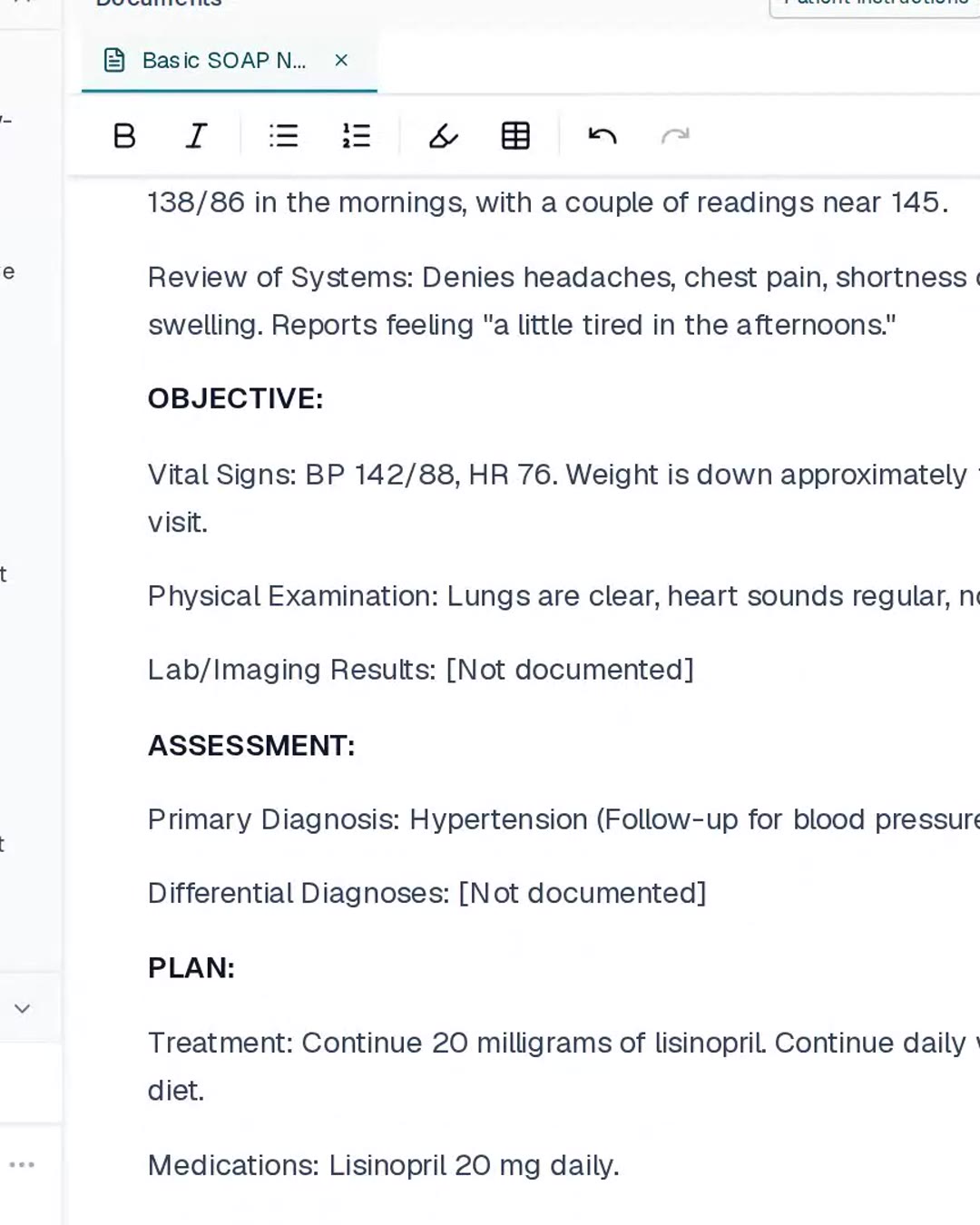
Watch a note come together, end to end.
A two-minute walkthrough, from the exam room to a signed, evidence-backed note.
 1:50
1:50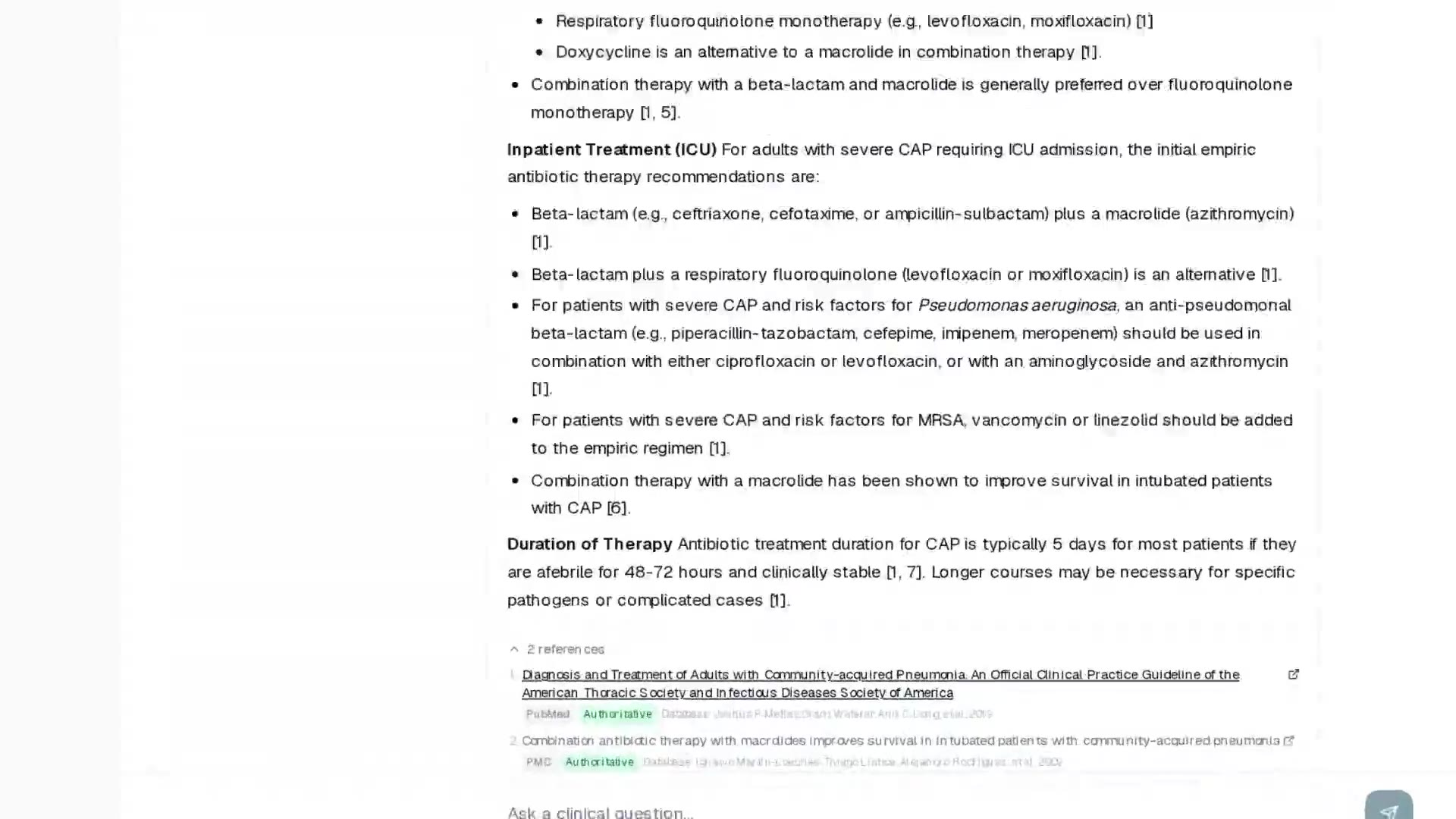 0:36
0:36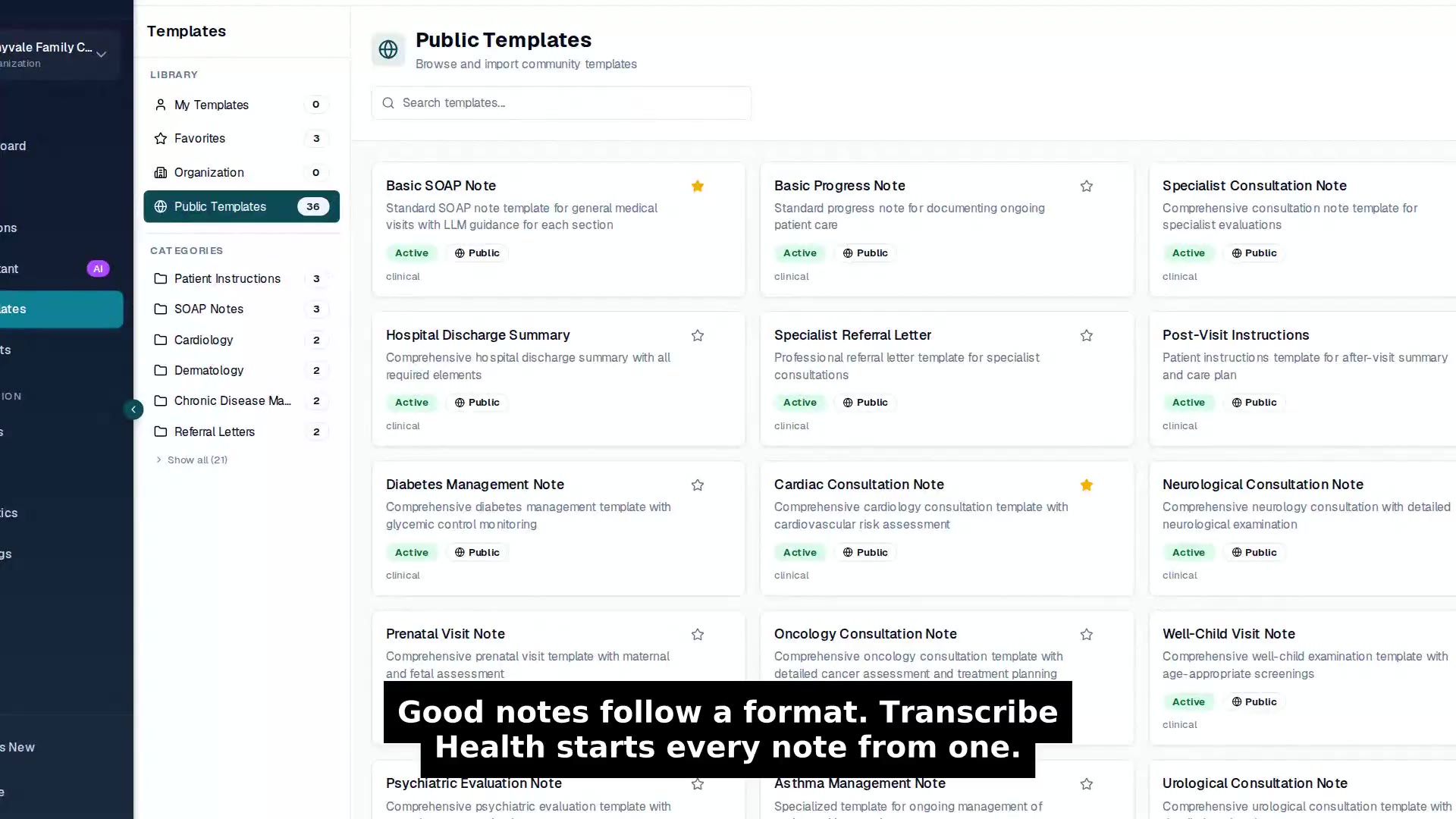 0:30
0:30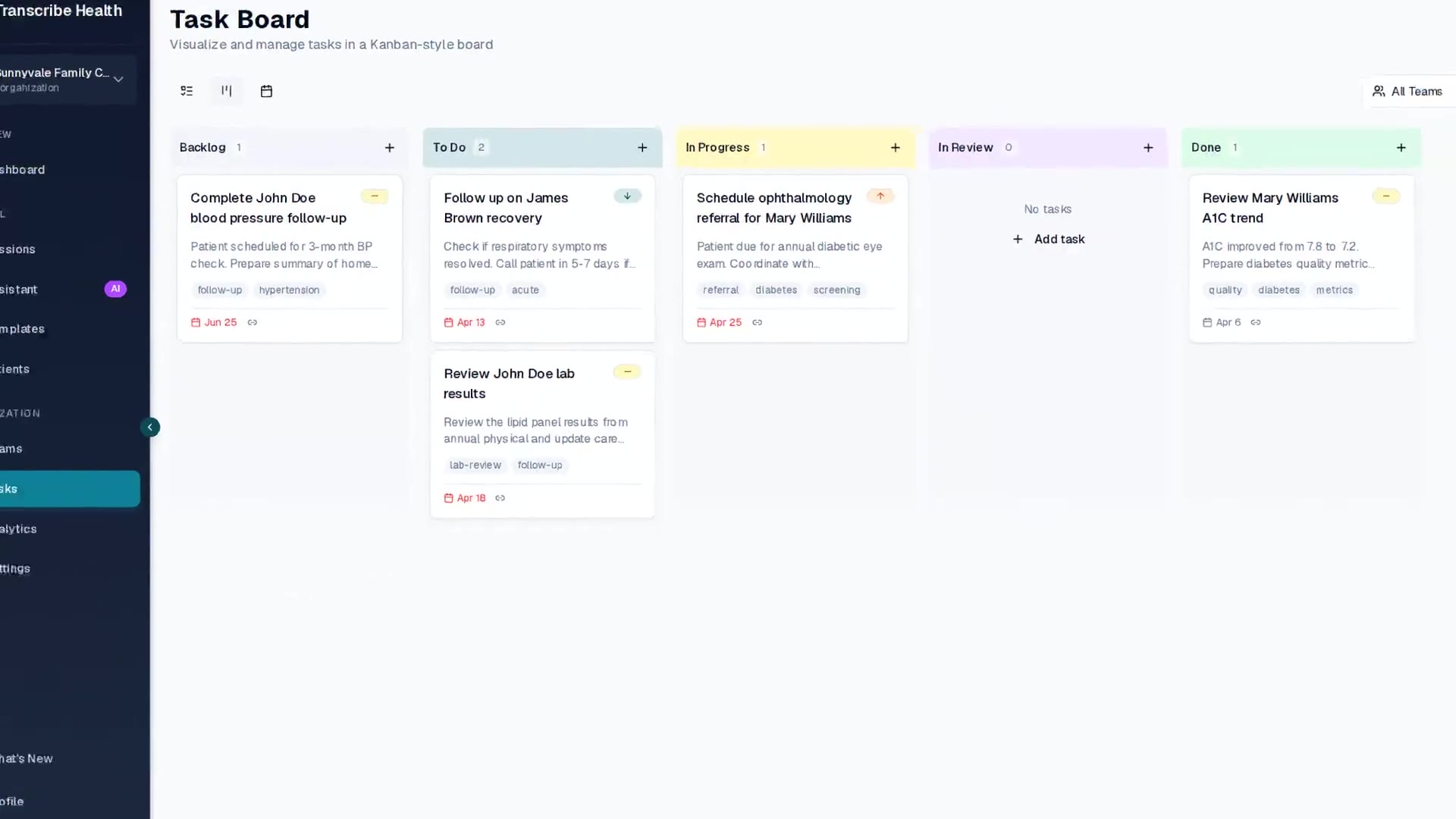 0:34
0:34What the research says about clinical documentation.
Transcribe Health is a new platform, so the figures below are from independent, published research on documentation burden and ambient AI scribes, not results from our own users.
Independent peer-reviewed and health-system research. Each figure links to its source. These are category findings, not Transcribe Health customer data.
For every hour physicians spend with patients, they spend nearly two more on the EHR and desk work, plus one to two hours of after-hours charting.
Sinsky et al., Annals of Internal Medicine, 2016Across more than 2.5 million uses at one health system, an ambient AI scribe was associated with over 15,700 hours of documentation time saved for clinicians who used it.
Tierney et al., NEJM Catalyst, 2025In a matched-control study, ambient-scribe users spent 8.5% less total time in the EHR and over 15% less time composing notes than comparable non-users.
JAMA Network Open, 2025A companion 2025 study reported that burnout among clinicians using an ambient AI scribe fell from about 52% to 39%.
JAMA Network Open, 2025Suggestions you can defend in the chart.
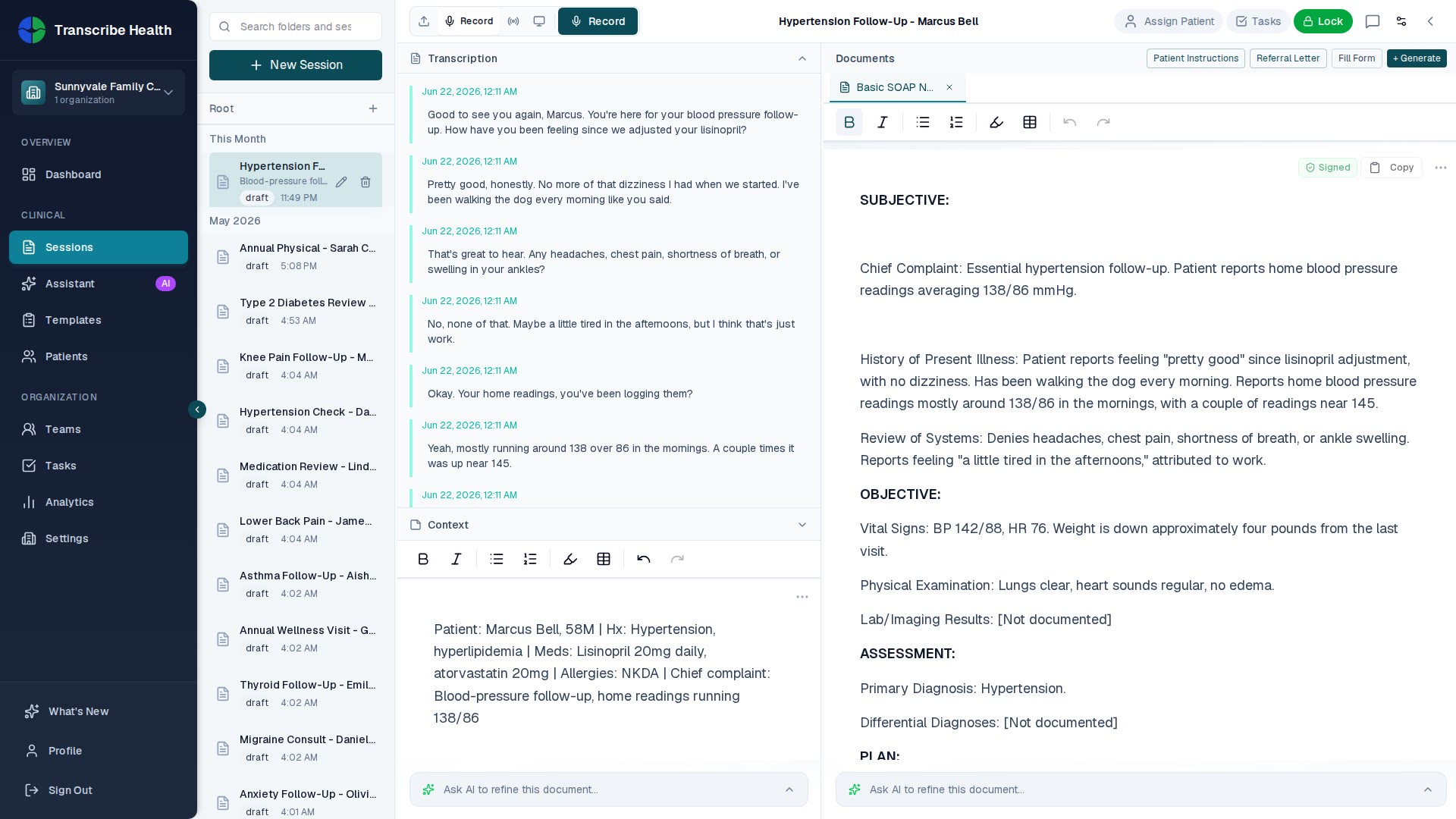
The scribe doesn't only transcribe. The assistant grounds its clinical answers in published guidelines and surfaces the source alongside them, scored for reliability, so the note that lands in the record is one you can stand behind.
Every answer links to the guideline or study behind it.
Each source is rated so you can weigh it before you trust it.
Every edit is logged, from first draft to signature.
Guidance weighted to the clinician's specialty.
Essential hypertension, stage 1. Initiate lisinopril 10 mg PO daily; recheck blood pressure in 4 weeks and reassess. ACC/AHA 2017
Illustrative example, not a real patient.
One note, handed across the whole care team.
A note isn't done when the visit ends. It moves through the people who own it, each step recorded, so nothing is lost between the exam room and the signature.
Captures the encounter and produces a structured SOAP draft within minutes.
Confirms medications and allergies, adds vitals, and resolves any flagged items.
Reviews the finished note against the evidence panel and signs off.
Care-team names shown are illustrative.
Try it on your next encounter.
Connect a recording device and document a real visit in your first session. Most teams are live the same afternoon.