
AI Scribe for Dermatology
Transcribe Health drafts your exam, follow-up, and procedure notes while you work, so the morphology and body-location detail is on the page before you leave the room.
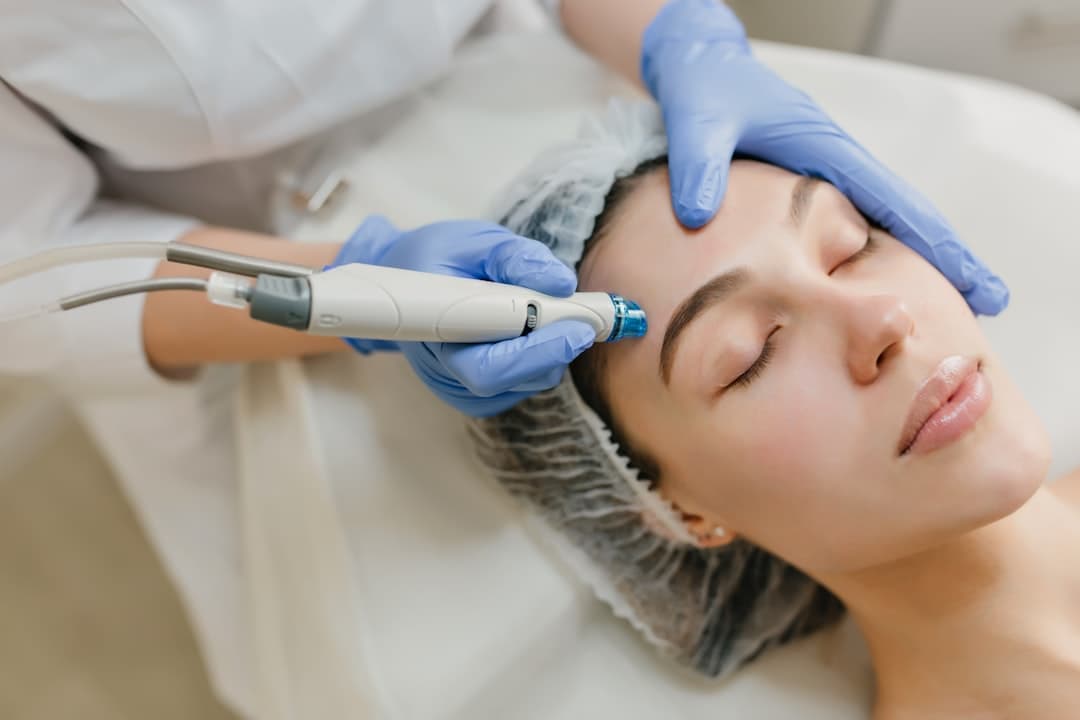
Photo: Look Studio / Unsplash
Dermatology documentation, from full skin exam to procedure
Dermatology is a high-volume clinic. A busy day runs through acne and eczema follow-ups, rash workups, full-body skin cancer screenings, and a steady stream of small procedures, and each one still needs a note that describes what you saw and where. The where matters here more than in most fields: a note that says "6 mm lesion" without the location is not much use when the patient comes back.
The detail is dense and repetitive. One full skin exam can log findings on the scalp, face, trunk, back, arms, and legs, each with a size, a morphology, and a decision to biopsy, treat, or watch. Then there is the procedure side: shave and punch biopsies, cryotherapy, electrodesiccation and curettage, and excisions, each of which needs the site, the technique, and the specimen sent to pathology. By hand that is either typing through clinic or dictating after the last patient leaves.
Transcribe Health listens to the visit, or to your narration during a procedure, and drafts a note that puts the detail where it belongs: the lesion description and its location, the site you biopsied, the specimen sent, the topical or systemic plan, and the reasoning behind your assessment. You read it and sign. Nothing is filed without you.
Documentation Challenges in Dermatology
- 1
Charting a high volume of short visits, where a full-body skin exam can touch a dozen sites and still needs a clean note before the next patient is roomed
- 2
Describing lesion morphology precisely (size in millimeters, color, border, and features like a pearly papule or asymmetric pigmented macule) and pinning each finding to an exact body location
- 3
Tying a shave biopsy or destruction to the pathology result and the follow-up decision, so the procedure note, the specimen, and the plan all line up
How Transcribe Health Helps Dermatology
Skin Exam and Lesion Notes
Records the morphology you describe and the body site it belongs to, so a multi-site full skin exam reads cleanly instead of as a wall of measurements.
Procedure and Pathology Documentation
Structures a note for a shave, punch, or excision from your narration, with the specimen sites and the pathology follow-up you dictate.
Cosmetic and Medication Documentation
Captures the plan for a topical regimen, a biologic, isotretinoin monitoring, or a cosmetic treatment without you retyping the drug names and doses.
A dermatology note, captured in real time
An abridged full skin exam with a suspicious lesion biopsy, drafted the way you would see it before signing.
58-year-old man with a history of significant sun exposure and two prior actinic keratoses presents for a routine full skin exam. His wife noticed a darker, changing mole on his left upper back over the past few months. Denies bleeding, itching, or pain at the site. No personal history of melanoma; a paternal uncle had a melanoma in his 60s. Uses sunscreen inconsistently.
Full-body skin exam performed. Left upper back: 8 mm asymmetric pigmented macule with irregular notched borders and color variation from tan to dark brown, no ulceration. Dorsal right forearm: 4 mm rough scaly erythematous papule consistent with actinic keratosis. Face and scalp: scattered seborrheic keratoses, no suspicious lesions. Trunk, arms, and legs otherwise without concerning nevi. No palpable axillary or cervical lymphadenopathy.
1) Atypical pigmented lesion, left upper back, clinically concerning for melanoma; biopsy indicated. 2) Actinic keratosis, right dorsal forearm. 3) Seborrheic keratoses, benign, no treatment needed. 4) History of chronic sun damage.
Left upper back lesion: broad shave (saucerization) biopsy performed after local anesthesia with 1% lidocaine with epinephrine; specimen sent for histopathology with a note to the pathologist regarding clinical concern for melanoma. Hemostasis achieved, wound care instructions given. Right forearm actinic keratosis treated with cryotherapy, liquid nitrogen, single lesion. Will call with pathology results within 7 to 10 days; if melanoma is confirmed, arrange wide local excision and discuss sentinel node biopsy based on depth. Counseled on daily broad-spectrum SPF 30 or higher and monthly self skin checks. Return in 6 months for repeat full skin exam, sooner if any lesion changes.
Illustrative example. Not a real patient encounter.
Built for dermatology coding and your EMR
Notes capture the lesion sizes, sites, and specimens that back up a biopsy, destruction, or excision code, and the problem complexity behind your E/M level. That is the detail auditors look for, and the first thing to slip when charting is rushed.
- 99213 / 99214Established-patient visit, low to moderate complexity
- 11102Tangential (shave) biopsy of skin, single lesion
- 11104Punch biopsy of skin, single lesion
- 17000Destruction of premalignant lesion (e.g. actinic keratosis), first lesion
- 11402Excision, benign lesion of trunk/arm/leg, 1.1 to 2.0 cm
- 11602Excision, malignant lesion of trunk/arm/leg, 1.1 to 2.0 cm
- L57.0Actinic keratosis
- D22.5Melanocytic nevi of trunk
- C43.52Malignant melanoma of skin of back
- L70.0Acne vulgaris
- L20.9Atopic dermatitis, unspecified
Fits the workflow you already have
Drafts drop into the EMRs dermatology practices run on, including ModMed EMA and Nextech, which are built for derm workflows, along with Epic, Oracle Health (Cerner), and athenahealth. You get whatever note type you are working in, a full skin exam, a procedure note, or a follow-up. It writes up the lesion descriptions and locations you dictate. It does not draw on a body-map diagram or read your dermatoscope; you make the call and it records it.
What's Happening in Dermatology
Teledermatology Expanded in 2025, Making Care Faster and More Accessible
Hybrid teledermatology models combining live video and photo submissions are now considered the most accurate. More insurers are permanently covering store-and-forward teledermatology with increased documentation audits.
Teledermatology visits require clear documentation distinguishing in-person vs. virtual components. AI transcription can standardize these requirements across visit modes.
Read moreCMS 2026: Permanent Telehealth Supervision Changes for Teaching Physicians
Starting 2026, CMS permanently allows teaching physicians to join telehealth visits virtually with residents and patients. Direct supervision can now be met through virtual presence using real-time audio-video.
New supervision models create documentation complexity around who was present and what was supervised virtually vs. in-person that AI transcription can capture systematically.
Read moreGlobal Skin Cancer Burden Projected to Rise Through 2050
A comprehensive study using Global Burden of Diseases data shows continued increases in skin cancer across age cohorts through 2050. Updated USPSTF recommendations continue to drive discussion about screening documentation standards.
Rising screening volumes require efficient documentation of full-body skin exams, lesion descriptions, and screening outcomes, all of which benefit from AI-assisted capture.
Read moreRelated Articles
AI Scribe in Dermatology and Procedure-Heavy Specialties
How AI medical scribes fit into dermatology, ophthalmology, urology, and other procedure-heavy specialties where office visits and procedure documentation overlap.
Clinical WorkflowsAI Medical Scribe for Dermatology Practices
Dermatology documentation is visual and fast-paced. Here's how AI scribes capture lesion descriptions, procedures and high-volume workflows.
Dermatology AI scribe questions
Does it understand dermatology terminology and lesion descriptions?
Can it keep track of location for a multi-site skin exam?
Can it document procedures, or only office visits?
How is patient information protected?
Does it connect to our EMR?
Ready to Transform Your Documentation?
Join thousands of healthcare providers who save hours every day with AI-powered medical transcription.
Start Free Trial