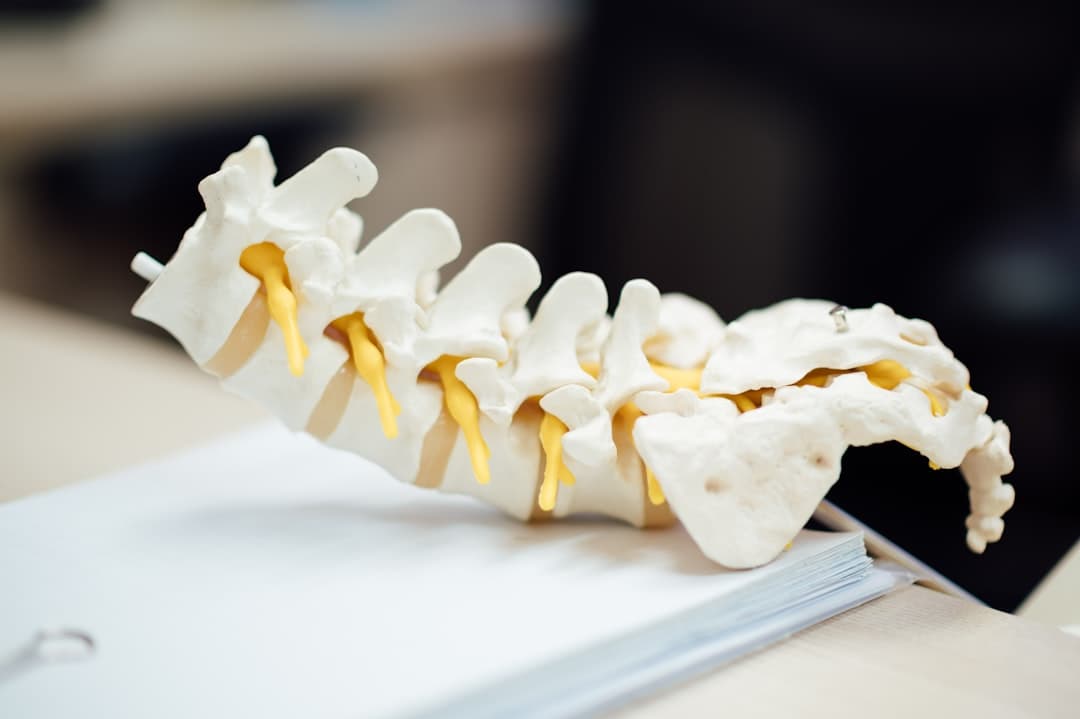
AI Scribe for Pain Management
Transcribe Health drafts your clinic evaluations and procedure notes while you work, so the pain score, functional status, and controlled-substance detail are on the page before you leave the room.
Photo: CHUTTERSNAP / Unsplash
Pain documentation, from clinic eval to procedure suite
A pain practice runs on a few kinds of notes that look nothing alike. The clinic evaluation is a long cognitive visit: pain location and character, what makes it better or worse, prior treatments that failed, imaging read, a physical exam that maps dermatomes and provocative maneuvers, and a plan that might mean medication, physical therapy, or a procedure. Every one of those pieces has to land in the note.
Then there is the procedure suite. An epidural steroid injection, a facet or medial branch block, a trigger point injection, or a radiofrequency ablation each needs a report precise enough to survive billing and audit: the level treated, the side, the approach, whether fluoroscopy or ultrasound guided the needle, the contrast pattern, the medication and dose, and how the patient tolerated it. Miss the laterality or the level and the claim is at risk.
The heaviest part is the compliance burden around opioids. A single follow-up on a long-acting opioid can require a PDMP query, a review of the signed controlled-substance agreement, a urine drug screen result read against what was prescribed, and a running morphine milligram equivalent total. Regulators and payers expect that trail on the page, and it is the first thing that gets thin when charting is rushed. Transcribe Health listens to the visit, or to your narration during a procedure, and drafts the note with those pieces where they belong. You read it and sign. Nothing is filed without you.
Documentation Challenges in Pain Management
- 1
Writing interventional procedure notes for injections and blocks with the level, laterality, needle approach, contrast, and imaging guidance that billing and audit review require
- 2
Recording the controlled-substance trail on every opioid visit: the PDMP check, the signed pain agreement, urine drug screen results, and morphine milligram equivalent math
- 3
Tracking pain scores and functional status across months of visits so a change in the plan has a documented reason behind it
How Transcribe Health Helps Pain Management
Interventional Procedure Notes
Turns your intra-procedure narration into a structured note for an epidural, a facet or medial branch block, a trigger point injection, or a radiofrequency ablation, with the level and side recorded.
Controlled-Substance Documentation
Captures the PDMP review, pain agreement, urine drug screen result, and current MME total in the note, so the opioid decision has its justification attached.
Functional and Pain-Score Tracking
Records the numeric pain rating and what the patient can and cannot do, in the same words each visit, so trend over time is legible.
A pain note, captured in real time
An abridged follow-up for chronic low back pain on a long-acting opioid, drafted the way you would see it before signing.
58-year-old woman returning for chronic low back pain radiating to the right buttock and posterior thigh. Rates pain 5 out of 10 today, down from 7 out of 10 last visit. Reports she can now walk about two blocks and stand long enough to cook dinner, both improved since starting the current regimen. No new weakness, numbness, or bowel or bladder changes. Denies running out early or seeking early refills. Tolerating the long-acting opioid without sedation or constipation on her current bowel regimen.
Antalgic gait, mild. Lumbar range of motion limited in extension, which reproduces the right-sided pain. Positive facet loading on the right. Straight leg raise negative bilaterally. Strength 5/5 in both lower extremities, sensation intact, reflexes symmetric. PDMP checked today: only prescriptions from this clinic, no overlapping controlled-substance fills. Urine drug screen from last visit consistent with prescribed oxycodone, negative for non-prescribed substances. Signed controlled-substance agreement on file and reviewed. Current opioid regimen totals approximately 45 morphine milligram equivalents per day.
1) Chronic low back pain with right lumbar radiculopathy, likely facet-mediated, functionally improved on current therapy. 2) Long-term opioid therapy, stable, PDMP and urine drug screen consistent with prescribing, no aberrant behavior noted. 3) Lumbar spondylosis.
Continue oxycodone ER 15 mg every 12 hours; MME remains at approximately 45 per day, below the 50 MME threshold. Continue gabapentin 300 mg three times daily and the current bowel regimen. Given the positive facet loading, schedule right L4-L5 and L5-S1 medial branch blocks under fluoroscopy; if the diagnostic blocks give durable relief, proceed to radiofrequency ablation. Refer to physical therapy for a core-strengthening program. Repeat urine drug screen at next visit. PDMP to be rechecked at each visit. Return in 4 weeks, sooner if pain worsens or new neurologic symptoms develop.
Illustrative example. Not a real patient encounter.
Built for pain coding and your EMR
Notes capture the data you reviewed, the problem complexity, and the risk that back up your E/M level, and the level, laterality, and guidance that back up a procedure. That is the detail auditors look for, and the first thing to slip when charting is rushed.
- 99204 / 99214New and established office visit, moderate complexity
- 62323Lumbar or sacral epidural steroid injection with imaging guidance
- 64493Lumbar or sacral facet joint injection, single level, with imaging guidance
- 64635Radiofrequency ablation of lumbar or sacral facet joint nerve, single level
- 20552Trigger point injection, one or two muscles
- 64483Transforaminal epidural injection, lumbar or sacral, single level
- M54.50Low back pain, unspecified
- M54.16Radiculopathy, lumbar region
- M47.816Spondylosis without myelopathy or radiculopathy, lumbar region
- G89.29Other chronic pain
- M79.7Fibromyalgia
Fits the workflow you already have
Drafts drop into the major EMRs pain practices run on: Epic, Oracle Health (Cerner), and athenahealth. You get whatever note type you are working in, a new-patient evaluation, a procedure report, or an opioid follow-up. It writes up the pain score, functional status, PDMP and urine drug screen review, and the procedure detail you narrate. It does not query the PDMP or read your fluoroscopy images for you; you make those checks and it records what you found.
Pain management AI scribe questions
Does it understand pain terminology and procedure detail?
Can it document interventional procedures, or only clinic visits?
How does it handle controlled-substance and opioid compliance documentation?
How is patient information protected?
Does it connect to our EMR?
Ready to Transform Your Documentation?
Join thousands of healthcare providers who save hours every day with AI-powered medical transcription.
Start Free Trial