AI Scribe for Pediatrics
Transcribe Health drafts your well-child, sick-visit, and follow-up notes while you talk with the family, so the growth data and the plan are on the page before you leave the room.
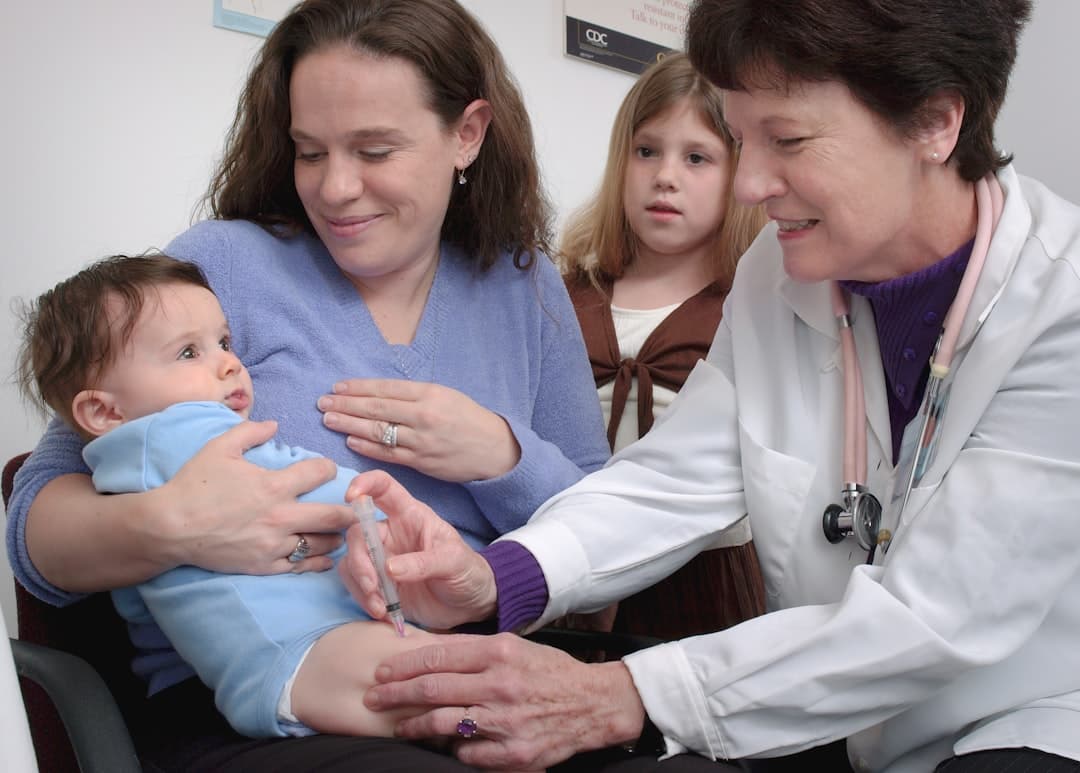
Photo: CDC / Unsplash
Pediatrics documentation, from newborn to adolescent
Pediatric clinic runs on two different notes that share a room. A well-child check is preventive and structured: interval history, growth percentiles, a developmental or autism screen, immunizations due, and age-specific anticipatory guidance. A sick visit is problem-focused and fast: an ear that hurts, a fever that will not break, a rash the parent photographed three days ago. Many mornings you move between the two every fifteen minutes.
Most of the history comes from a parent, not the patient. A toddler cannot tell you when the fever started or how many wet diapers there have been today, so you are reconciling what one caregiver remembers with what another reported at daycare. Every dose is weight-based, which means the note has to carry the weight, the mg/kg, and the number you landed on, not just a drug name. Percentiles and milestones only make sense against the last visit, so the trend matters as much as today's value.
Transcribe Health listens to the visit and drafts a note that puts the pediatric detail where it belongs: growth percentiles, the developmental screen, the immunizations given, and the weight-based dose with your reasoning behind it. You read it and sign. Nothing is filed without you.
Documentation Challenges in Pediatrics
- 1
Switching between well-child templates (growth percentiles, developmental milestones, anticipatory guidance, immunization status) and problem-focused sick-visit notes, often in the same clinic hour
- 2
Recording growth and development over time: height, weight, and head circumference percentiles, BMI trends, and milestone screening results that only mean something in context
- 3
Getting the weight-based dose right in the note when a parent, not the patient, is giving the history, and the child cannot confirm symptoms, timing, or what has already been tried at home
How Transcribe Health Helps Pediatrics
Well-Child and Sick-Visit Notes
Drafts the note type you are in, a preventive well-child check with anticipatory guidance or a focused acute visit, from what you and the family actually say.
Growth and Development Capture
Puts the percentiles, BMI, and milestone screening results you review into the note, next to the plan they drive.
Weight-Based Dosing in the Plan
Records the drug, the mg/kg reasoning, and the dose you decide on, so what you said in the room matches what is written.
A pediatric note, captured in real time
An abridged sick visit for a common toddler complaint, drafted the way you would see it before signing.
18-month-old girl brought in by mother for two days of fever and left ear tugging. Tmax 39.1 C at home last night, responsive to weight-based acetaminophen. Decreased appetite, still taking fluids, wet diapers about normal. Two days of clear rhinorrhea before the fever started. No vomiting, no rash, no ill contacts at daycare per mother. Immunizations up to date. No known drug allergies.
Weight 11.2 kg (60th percentile), length 82 cm (55th percentile), temp 38.6 C in clinic, HR 128, RR 26, SpO2 99% on room air. Alert, consolable in mother's lap, well hydrated with moist mucous membranes. Left tympanic membrane erythematous and bulging with loss of landmarks and reduced mobility on pneumatic otoscopy. Right TM normal. Oropharynx without exudate, no cervical lymphadenopathy. Lungs clear, no increased work of breathing.
1) Acute otitis media, left, in an otherwise well-appearing 18-month-old, febrile but hydrated and feeding. 2) Recent viral upper respiratory infection, resolving.
Start amoxicillin 90 mg/kg/day divided twice daily, approximately 500 mg by mouth twice daily for 10 days for this 11.2 kg child. Continue weight-based acetaminophen or ibuprofen for fever and pain. Reviewed hydration, expected fever course, and return precautions with mother: worsening pain, fever beyond 48 to 72 hours on antibiotics, poor fluid intake, or reduced wet diapers. Recheck if symptoms persist. No antibiotic allergy history; mother verbalized understanding of the dosing schedule.
Illustrative example. Not a real patient encounter.
Built for pediatric coding and your EMR
Notes capture the history, exam, and decision-making that back up your E/M level, plus the preventive and vaccine-administration detail pediatrics bills on. That is the detail payers look for, and the first thing to slip when clinic is running behind.
- 99392 / 99393Preventive well-child visit, established patient (early childhood / late childhood)
- 99213 / 99214Established-patient sick visit, low to moderate complexity
- 99381 / 99382Preventive well-child visit, new patient (infant / early childhood)
- 90460Immunization administration through 18 years with counseling, first component
- 90461Immunization administration, each additional vaccine component
- 96110Developmental screening with scoring and documentation (e.g. ASQ, M-CHAT)
- Z00.129Routine child health exam without abnormal findings
- H66.92Otitis media, unspecified, left ear
- J06.9Acute upper respiratory infection, unspecified
- R50.9Fever, unspecified
- Z23Encounter for immunization
Fits the workflow you already have
Drafts drop into the EMRs pediatric practices actually run on: Epic, Oracle Health (Cerner), athenahealth, and office systems like Office Practicum and PCC. You get whatever note type you are working in, a well-child check, a sick visit, or a follow-up. It writes up the growth percentiles, developmental screens, and weight-based dosing you dictate. It does not calculate doses for you or replace your growth-chart and immunization-forecast tools; you make the call and it records it.
What's Happening in Pediatrics
Pediatric Mental Health Emergency Persists Four Years After Declaration
Four years after the AAP, AACAP, and Children's Hospital Association declared a national emergency for children's mental health, the crisis remains urgent. ED visits for youth mental health continue to rise.
Pediatricians are now primary gatekeepers for mental health screening. AI transcription can help document the expanded behavioral health components of routine visits without adding time.
Read moreAAP Mental Health Competencies Now Integral to Well-Child Visits
The AAP's Mental Health Competencies integrate behavioral screening into routine well-child visits, requiring pediatricians to eliminate the false dichotomy of physical and mental health. The Bright Futures periodicity schedule expands screening requirements annually.
Well-child visits now require documentation of developmental screening, behavioral assessments, and mental health questionnaires in addition to physical exam. AI transcription captures all components in a single workflow.
Read morePediatric ED Mental Health Visits Rising While Workforce Cannot Keep Pace
Trends show increasing ED and primary care utilization for pediatric mental health conditions, while the children's behavioral health workforce remains severely constrained.
As pediatric visits become more complex with both physical and behavioral components, documentation burden increases. AI transcription helps manage the expanding scope of each encounter.
Read moreRelated Articles
AI Scribe in Pediatrics: Vaccines, Parent-Child Dynamics, and Short Encounters
How AI medical scribes fit into pediatric practice, including well-child visits, vaccine workflows, parent-mediated history-taking, and the quirks that affect note quality.
clinical-documentationAI Scribe for Group Visits, Family Meetings, and Multi-Speaker Encounters
How AI medical scribes handle visits with more than one speaker, including family meetings, shared medical appointments, and pediatric visits with parents.
Clinical WorkflowsAI Medical Scribe for Pediatrics
Pediatric encounters involve parents, developmental milestones and age-specific care. Here's how AI scribes handle pediatric documentation.
Pediatrics AI scribe questions
Does it handle weight-based dosing and pediatric terminology?
Can it tell a well-child check from a sick visit?
What happens when the parent gives the history, not the child?
How is patient information protected?
Does it connect to our EMR?
Ready to Transform Your Documentation?
Join thousands of healthcare providers who save hours every day with AI-powered medical transcription.
Start Free Trial