
How NLP (Natural Language Processing) Powers Clinical Documentation
A clear explanation of how NLP technology turns doctor-patient conversations into structured clinical notes, and why it matters for healthcare.

By Fatih Aktas, Founder & CEO
Published
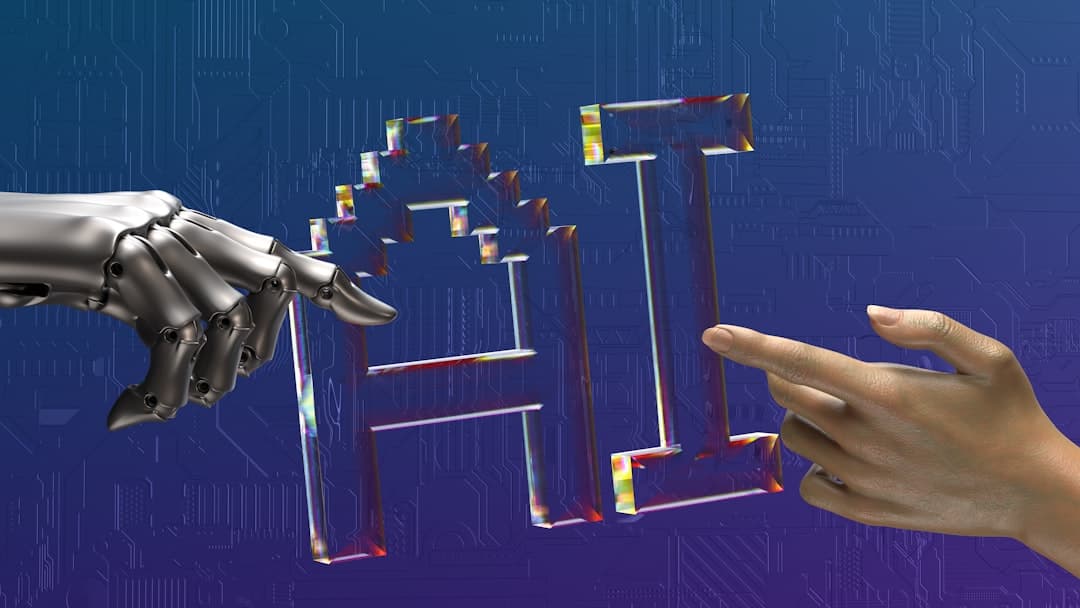
The technology behind the magic
A patient tells their doctor: "My knee has been killing me for about three weeks now. It's worst in the morning, gets a bit better after I move around. Ibuprofen helps some but my stomach can't handle it anymore."
Thirty seconds later, a clinical note appears:
CC: Left knee pain x 3 weeks. Worse in AM, improves with activity. Ibuprofen provides partial relief; discontinued due to GI intolerance.
That transformation - from casual conversation to structured clinical language - is powered by natural language processing. NLP is the branch of artificial intelligence that gives computers the ability to read, interpret, and generate human language. In healthcare, it's the engine that makes AI medical scribes possible.
Heres how it actually works, without the jargon.
From sound waves to clinical notes: the pipeline

When a provider and patient talk during an encounter, the audio passes through a series of processing stages. Each one adds a layer of understanding:
Stage 1: Speech recognition. Raw audio becomes raw text. The system identifies individual words from sound waves, handling overlapping speech, background noise, and medical pronunciation. This is where "borborygmi" gets transcribed correctly instead of being interpreted as gibberish.
Stage 2: Speaker diarization. The system determines who said what. Provider statements get tagged differently from patient statements. This is what allows the AI to attribute the chief complaint to the patient and the exam findings to the provider.
Stage 3: Named entity recognition. NLP identifies specific medical entities in the text - drug names, dosages, body parts, symptoms, diagnoses, and procedures. "Metformin 500mg twice daily" gets tagged as a medication entity with its associated dose and frequency.
Stage 4: Relation extraction. The system maps relationships between entities. "Patient reports knee pain that started after a fall" connects the symptom (knee pain) to its onset event (fall) and attributes it to the patient. These relationships form the semantic backbone of the clinical note.
Stage 5: Clinical reasoning. Advanced NLP models infer clinical context that wasn't explicitly stated. If the provider discusses HbA1c levels and adjusts metformin dosing, the system understands this is a diabetes management encounter - even if nobody said the word "diabetes."
Stage 6: Note generation. All extracted information gets organized into the appropriate sections of a clinical note template. Symptoms go to the subjective section. Exam findings go to the objective. Diagnoses and clinical thinking go to the assessment. Next steps go to the plan.
What makes medical NLP different from regular NLP
The NLP powering your email's spam filter and the NLP powering a clinical documentation system share foundational technology. But medical NLP faces unique challenges that require specialized approaches:
Ambiguity with consequences. In everyday language, ambiguity is tolerable. If a chatbot misunderstands "bank" as a financial institution versus a river bank, the worst outcome is a confused response. In medicine, confusing "hyper" and "hypo" in a thyroid note could lead to the wrong treatment.
Domain-specific training data. General NLP models are trained on internet text, books, and public datasets. Medical NLP requires training on clinical conversations, medical records, and specialty-specific language - data that's both scarce and heavily regulated under HIPAA.
Negation detection. "Patient denies chest pain" and "patient reports chest pain" contain the same medical entity but opposite clinical meanings. Medical NLP must reliably detect negation, uncertainty ("possible pneumonia"), and hedging ("symptoms suggestive of...") - distinctions that general NLP models frequently miss.
Temporal reasoning. "Pain started three weeks ago, improved last week, worse again since yesterday" requires the NLP system to construct a timeline. General language models struggle with relative time references. Medical NLP systems anchor these to the encounter date and express them in clinical documentation conventions.
The models behind the curtain
Modern clinical NLP systems use large language models - the same family of technology behind ChatGPT and similar tools - but fine-tuned for medical applications:
Base models provide general language understanding. They know grammar, syntax, and broad world knowledge. Think of this as the foundation of the building.
Medical fine-tuning adapts the base model to healthcare language. The model ingests millions of clinical notes, medical textbooks, drug databases, and coding references. After fine-tuning, it knows that "SOB" in a clinical note means shortness of breath, not something offensive.
Specialty adaptation narrows the model further. A cardiology NLP model understands echocardiogram reports differently than a dermatology model interprets skin lesion descriptions. This layered approach means the same underlying technology produces appropriate output across different medical contexts.
What NLP gets right today
Clinical NLP has made remarkable strides in the past few years:
- Medical term recognition exceeds 96% accuracy for common clinical vocabulary
- Medication extraction - identifying drug names, doses, routes, and frequencies - reaches 94-97% accuracy
- Section classification - placing information in the correct note section - achieves 90-95% accuracy
- Sentiment and severity - distinguishing "mild discomfort" from "severe pain" - is reliably captured
These accuracy levels make AI-generated clinical notes viable as draft documents that require physician review rather than complete rewriting.
Where NLP still struggles
Honest assessment of current limitations matters for setting realistic expectations:
Implied information. When a provider examines a patient and says nothing about the cardiac exam, it might mean the exam was normal (negative finding) or that it wasn't performed. NLP can't reliably distinguish between unstated normal and unstated not-done.
Sarcasm and figurative language. A patient saying "Oh, my back is just wonderful" sarcastically means their back hurts. NLP models are getting better at detecting sarcasm, but it's still an area of active research.
Heavily accented speech. While medical NLP handles most accents well, very strong accents combined with rapid speech can degrade both the speech recognition and downstream NLP accuracy.
Rare conditions and novel terminology. NLP models know common medical language thoroughly but may struggle with very rare conditions, newly coined terms, or highly localized medical slang.
Why it matters for your practice
You don't need to understand the technical details of NLP to benefit from it. What matters is the output: a structured, accurate clinical note that appears within seconds of your encounter ending, ready for review.
But understanding the basics helps set appropriate expectations. NLP-powered documentation is remarkably capable - and improving continuously. It's not perfect. The physician review step exists for good reason. And the technology works best when providers speak clearly, use patient names for attribution, and verbalize their clinical reasoning during the encounter.
The providers who get the most value from NLP-powered scribes are the ones who understand it as a highly capable assistant, not a replacement for clinical judgment.
Where to go deeper
If you want to understand how the broader category fits together, our complete guide to medical transcription in 2026 covers the technology landscape, regulatory environment, and deployment patterns.
For the accuracy side — what the published numbers actually mean for your practice and your patients — clinical NLP accuracy benchmarks for 2026 breaks down realistic accuracy ranges across the seven dimensions of clinical NLP that matter for patient safety.
To compare how different platforms apply NLP to clinical documentation, our 2026 AI medical scribe comparison walks through the leading vendors side by side. The category of "always-listening" deployment is covered in ambient clinical intelligence explained.
Transcribe Health uses advanced NLP to generate structured clinical notes from natural conversations. Experience the technology firsthand with a free trial — see the pricing page for plans starting at the solo-provider tier.
Related Articles
Beyond the Transcript: How Multimodal AI Scribes Are Learning to Capture the Exam
Most AI scribes only hear the visit. Multimodal documentation adds vision and structured data to capture what the conversation alone misses, and it raises new privacy questions worth understanding.
AI TechnologyClinical NLP Accuracy Benchmarks: What the 2026 Numbers Actually Mean
An honest look at clinical NLP accuracy benchmarks in 2026, what vendors measure, what those numbers really mean for patient safety, and how to evaluate them.
AI TechnologyAmbient Clinical Intelligence Explained: What It Is and What It Isn't
Ambient clinical intelligence is the umbrella term for AI that listens to patient encounters and generates documentation. Here's what it actually means in 2026 and how it compares to ambient AI scribes.
Ready to Try AI-Powered Documentation?
Join thousands of healthcare providers saving hours every day with Transcribe Health.
Start Free Trial