How AI Scribes Integrate with OSCAR EMR
OSCAR EMR is one of Canada's most popular open-source electronic medical records. Learn how AI scribe integration works with OSCAR to streamline clinical documentation for Canadian physicians.

By Fatih Aktas, Founder & CEO
Published
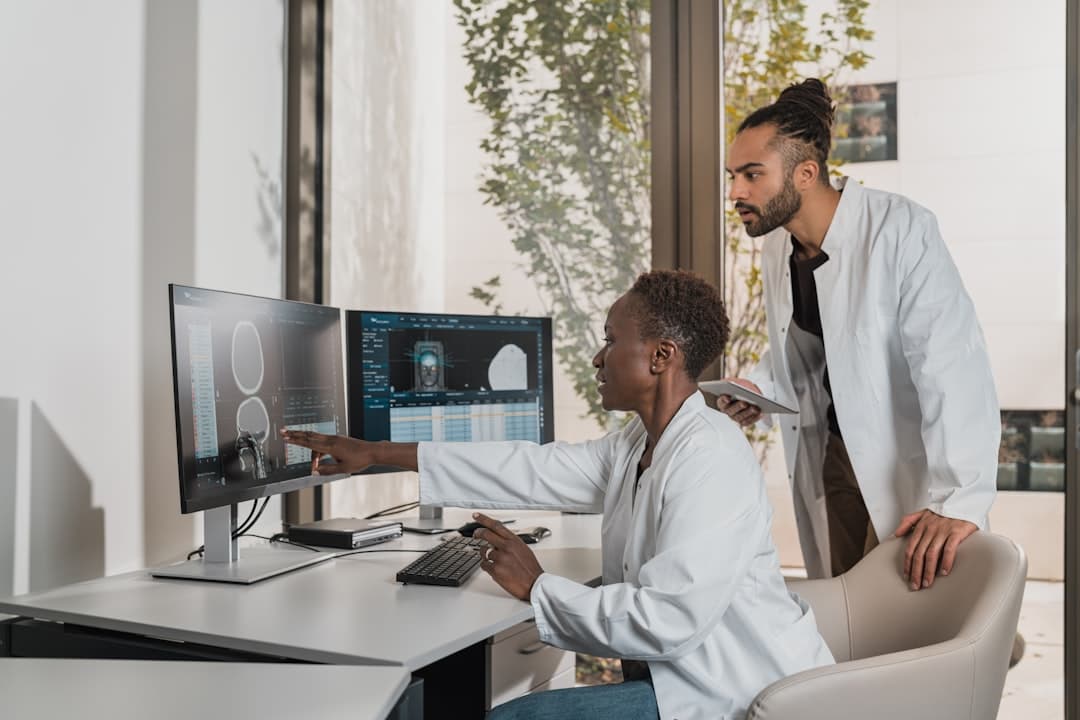
OSCAR EMR and why it matters for Canadian clinics
OSCAR (Open Source Clinical Application Resource) is one of Canada's most widely adopted EMR platforms. Originally developed at McMaster University in 2001, its grown into the backbone of thousands of family medicine and primary care practices across the country. The platform is maintained by OSCAR EMR, with contributions from a community of developers, clinicians, and open-source advocates.
What makes OSCAR different from proprietary systems like TELUS PS Suite or QHR Accuro is the open-source model. Clinics can self-host it. They can modify the codebase. And third-party developers can build integrations without navigating a locked-down marketplace.
OSCAR handles scheduling, billing, e-forms, encounter notes, prescriptions, lab results, and messaging. It supports provincial billing for every Canadian province, including OHIP in Ontario, MSP in British Columbia, and Alberta Health Care. Its certified by OntarioMD and used by an estimated 10,000+ physicians nationwide.
But OSCAR still suffers from the same documentation problem every EMR does. Physicians spend too much time typing notes and not enough time with patients. That's where AI scribe integration changes things.
The documentation burden OSCAR cant solve alone
Canadian family physicians spend an average of two hours on documentation for every hour of direct patient care. Evening charting, weekend catch-up sessions, and rushed encounter notes are the norm rather than the exception. OSCAR provides the fields for documentation, but someone still has to fill them in.
The problem isn't the EMR. It's the manual process.
A typical family medicine visit in Canada generates several documentation requirements:
- SOAP encounter note in the patient's chart
- Billing submission with the correct fee code (e.g., A007A for a general assessment in Ontario)
- e-Form completion for preventive care reminders, chronic disease management, or screening tools
- Prescription updates if medications change
- Referral letters if specialist involvement is needed
Each of these tasks pulls the physician away from the conversation. Many doctors resort to templated notes that sacrifice clinical detail for speed. Others dictate notes after hours, reconstructing conversations from memory.
AI scribes address this by capturing the encounter in real time and generating structured documentation automatically. But the value only materializes when the output flows directly into OSCAR - without copy-paste workarounds.
How the technical integration actually works
OSCAR's open-source architecture gives AI scribe vendors more integration flexibility than most proprietary EMRs. There are several pathways for connecting an AI scribe to an OSCAR instance, and the right approach depends on how the clinic hosts their system.
REST API integration. OSCAR exposes a set of REST endpoints for reading and writing clinical data. An AI scribe can authenticate with the OSCAR instance and push completed encounter notes directly into the patient's chart. This is the cleanest approach because it handles structured data - the note text, billing codes, and form fields can each land in the correct place.
e-Form population. OSCAR's e-Form system is one of its most powerful features. AI scribes can generate structured output that maps to specific e-Form fields. For chronic disease management forms like the Diabetes Flow Sheet or the Preventive Care Checklist, the AI can extract relevant clinical details from the conversation and pre-populate the fields for physician review.
Billing code suggestion. Provincial fee schedules are complex. Ontario alone has hundreds of fee codes across the Schedule of Benefits. An AI scribe that understands the clinical context can suggest the appropriate billing code - an A007A for a general assessment, A004A for a general re-assessment, K998A for a chronic disease management premium. The code appears in OSCAR's billing module, ready for the physician to confirm and submit.
CDS (Clinical Decision Support) triggers. When the AI scribe detects specific clinical content - a patient over 50 who hasn't had a colonoscopy, or a diabetic with no recent HbA1c - it can flag these gaps in OSCAR's preventive care tracking system.
The integration typically requires coordination with the clinic's OSCAR service provider (OSP). Companies like Juno EMR, KAI Innovations, and PureFORM Medical handle hosting and customization for most OSCAR practices in Canada.
What an AI-integrated visit looks like in practice
Here's how a typical appointment flows when an AI scribe is connected to OSCAR:
Before the visit. The physician opens the patient's chart in OSCAR. The AI scribe pulls in relevant context - the problem list, active medications, and recent lab results. This context helps the AI generate more accurate notes because it knows the patient's history.
During the visit. The physician starts the AI scribe session. The ambient microphone captures the natural conversation between doctor and patient. No templates, no clicking through menus, no typing. The physician focuses entirely on the patient.
Immediately after. The AI generates a structured SOAP note and presents it for review. The physician sees the subjective complaint, objective findings, assessment, and plan - all formatted to match their preferred note style. Suggested billing codes appear alongside the note.
Review and sign-off. The physician spends 30 to 60 seconds reviewing the AI-generated note. They can edit any section, adjust the billing code, or add details the AI missed. One click pushes the finalized note into OSCAR's encounter record.
Billing submission. The confirmed billing code flows into OSCAR's billing module. For provinces with electronic claims submission, the claim can go out the same day. No more batching claims at the end of the week.
The entire post-visit documentation process drops from 5-8 minutes to under 2 minutes. For a physician seeing 25 patients a day, thats 75 to 150 minutes recovered. Time that goes back to patient care, or frankly, back to the physician's personal life.
PIPEDA and provincial privacy requirements
Canadian physicians face a different privacy framework than their American counterparts. Instead of HIPAA, they navigate PIPEDA at the federal level and province-specific health privacy legislation that typically takes precedence for health data.
Any AI scribe integration with OSCAR must satisfy several privacy requirements:
Data residency. Multiple provinces restrict or discourage health data from leaving Canada. British Columbia mandates that personal information held by public bodies remains in Canadian jurisdiction. Ontario's PHIPA creates obligations around cross-border data transfers. Your AI scribe vendor must process and store all audio and transcript data within Canadian data centers.
Consent. Patients must understand that an AI is recording and processing their encounter. Implied consent covers treatment-related documentation in most provinces, but transparency matters. Best practice is a brief verbal notification at the start of the visit plus signage in the waiting area.
Data minimization. The AI should only capture and retain what's necessary for clinical documentation. Audio recordings should be deleted after the transcript is generated and reviewed. Retaining raw audio longer than necessary creates liability.
Audit trails. OSCAR already maintains audit logs for chart access. The AI scribe integration needs to extend this - logging when data was sent to the AI service, when the generated note was returned, and when the physician approved it.
Information management agreements. Alberta's HIA and several other provincial laws require formal agreements between the clinic (the "custodian" or "trustee" of health information) and any third-party processor. This is the Canadian equivalent of a Business Associate Agreement under HIPAA.
For a deeper look at Canadian privacy requirements for AI transcription, see our PIPEDA compliance guide. Transcribe Health hosts all Canadian customer data exclusively on Canadian infrastructure to satisfy these requirements from day one.
Real benefits OSCAR practices are seeing
The case for AI scribe integration isn't theoretical. Practices using AI scribes with their OSCAR installations report measurable improvements across several dimensions:
| Metric | Before AI Scribe | After AI Scribe |
|---|---|---|
| Post-visit charting time | 5-8 min per patient | 1-2 min per patient |
| After-hours documentation | 1-2 hours daily | Near zero |
| Billing code accuracy | Variable (missed modifiers, downcoding) | Consistent capture of applicable codes |
| Patient face time per visit | 8-10 minutes | 12-15 minutes |
| Same-day chart completion | 40-60% | 95%+ |
Billing accuracy is where the ROI shows up fastest. Many family physicians undercode their visits. An A003A (consultation) that should be billed as an A007A (general assessment) might only cost $5-10 per visit, but across 25 patients a day and 200+ working days a year, the missed revenue adds up to thousands of dollars annually.
Note quality improves because the AI captures the actual conversation rather than a physician's abbreviated memory of it. Specialist referrals receive more detailed histories. Continuity of care improves when locums or covering physicians can read thorough notes.
Physician wellbeing is harder to quantify but impossible to ignore. The physicians most at risk of burnout are the ones spending their evenings catching up on documentation. Eliminating after-hours charting doesn't just save time - it changes how sustainable the job feels.
Getting started with AI scribe integration in your OSCAR practice
If you're running OSCAR and considering an AI scribe, here's a practical path forward:
1. Check your OSCAR version and hosting setup. Integration capabilities depend on which version of OSCAR you're running and whether your OSP supports API access. Juno EMR and other major OSPs typically support REST API integration. Self-hosted instances may require additional configuration.
2. Evaluate your provincial requirements. Review the privacy legislation that applies to your practice. If you're in Ontario, that's PHIPA. In Alberta, HIA. In BC, PIPA or FIPPA depending on whether you're a public or private provider. Your AI scribe vendor should be able to demonstrate compliance with the relevant law.
3. Run a pilot. Start with a single physician and a defined patient population. Track charting time, billing accuracy, and physician satisfaction over 2-4 weeks. This generates concrete data for a broader rollout decision.
4. Train your team. The physician using the AI scribe needs minimal training - the technology is designed to be invisible during the encounter. But front desk staff need to understand the consent notification process, and billing staff should know how AI-suggested codes flow into the billing module.
5. Scale across your practice. Once the pilot confirms the value, roll out to additional providers. Most practices complete a full rollout within 4-6 weeks.
Transcribe Health offers pre-built OSCAR integration with support for all major Canadian provinces and billing schedules. Visit our OSCAR integration page for technical details, or check our pricing to see plan options for Canadian practices.
Related Articles
AI Scribes in Community Health Centers and FQHCs
Federally qualified health centers carry heavy documentation and reporting burdens on thin budgets. Here is how AI scribes fit the FQHC model, from UDS reporting to high-volume, multi-language visits.
Practice ManagementHow to Choose an AI Medical Scribe for Your Specialty
Not all AI scribes handle every specialty equally. Learn what to look for when choosing an AI scribe that understands your specific clinical workflow, terminology, and documentation requirements.
Practice ManagementAI Medical Scribe vs Human Scribe: Which Is Better for Your Practice?
Compare AI and human medical scribes across cost, accuracy, scalability, and workflow fit to find the right option for your practice.
Related Resources
Ready to Try AI-Powered Documentation?
Join thousands of healthcare providers saving hours every day with Transcribe Health.
Start Free Trial