AI Scribe for Psychiatry and Mental Health: What's Different
How AI medical scribes fit into psychiatric and mental health visits, including consent dynamics, therapeutic alliance considerations, and what to leave out of the note.

By Fatih Aktas, Founder & CEO
Published
Mental health is the hardest case, and the highest-value one
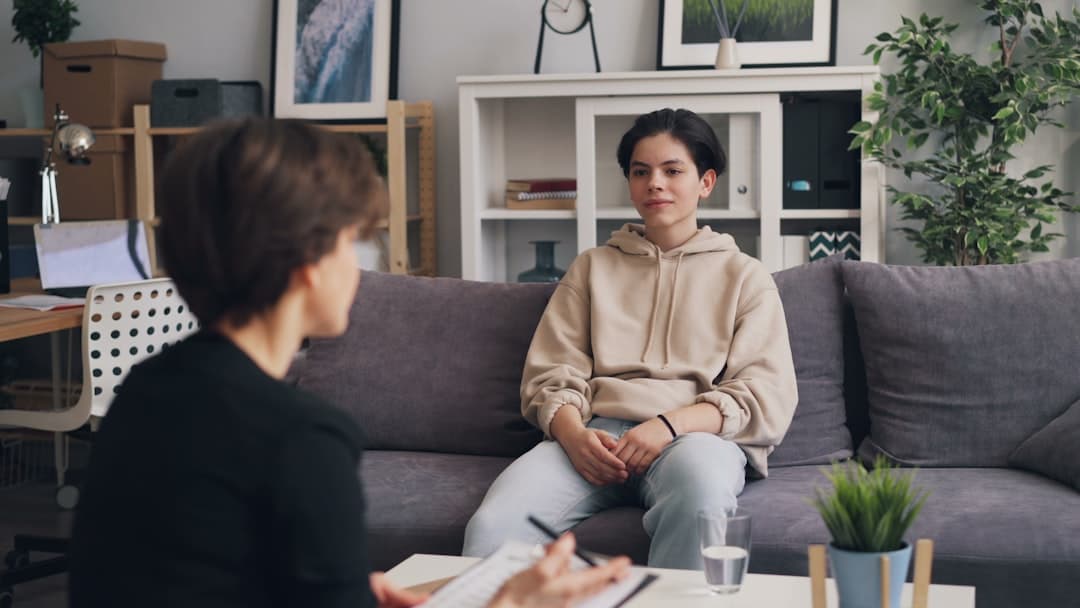
The patient population most likely to refuse an AI scribe is the patient population whose visits take the longest to document. Mental health is the specialty where the consent rate is lowest, the documentation burden is highest, and the stakes around what goes into the chart are most sensitive.
That combination makes psychiatry the most interesting case for AI scribes. When it works, the time savings are 2 to 3 times what primary care sees because the visits are longer and the notes are denser. When it fails, it fails harder because the breach of therapeutic alliance from a poorly handled recording is more damaging than in other specialties.
This article is about how psychiatry, psychology, and mental health practice should think about AI scribes differently from a generic primary care framing.
The consent conversation is different
A primary care patient consenting to an AI scribe is usually consenting to a 12-minute visit that involves a sore throat, a blood pressure check, and a med refill. The data sensitivity is moderate. The patient's emotional state is mostly stable.
A psychiatric patient consenting to an AI scribe is sometimes consenting to a 50-minute session during which they will discuss suicidal ideation, abuse history, relationship dynamics, or substance use. The data sensitivity is very high. The patient's emotional state may be fragile and consent given easily at the start of the visit may be revisited as the conversation deepens.
The consent script has to acknowledge this. A version that has worked in psychiatric practices:
"I'd like to use an AI tool to help me take notes during our session today. It listens, it doesn't share what you say outside the documentation. If at any point you'd like to pause it or turn it off, you can ask, and I'll do that immediately. Some of what we talk about may not need to be in the formal record, and that's a decision we can make together. How does that sound?"
The script does three things differently from a primary care version:
- It names the pause/off control explicitly. Patients in mental health are more likely to need to use it.
- It signals "what's in the record" is negotiable. This is true everywhere but matters most in mental health, where patients have legitimate reasons to want some disclosures off the chart.
- It ends with a question, not a request for consent. "How does that sound" invites a fuller response than "is that okay" and surfaces hesitation that would otherwise stay hidden.
The first 30 to 60 seconds of the conversation around consent is where the therapeutic alliance is reinforced or undermined. Mental health providers who get this right report consent rates of 70 to 85%, which is meaningfully above the worst-case predictions for the specialty.
What to leave out of the note
The single biggest difference between psychiatric AI-scribed notes and primary care AI-scribed notes is that more content gets generated than belongs in the final chart.
The patient discloses childhood abuse history during the session. The AI captures it accurately. But should that disclosure go in the chart as a detailed narrative, or as a brief functional summary? Often the answer is the summary; the detailed disclosure stays in the therapist's memory and the therapeutic relationship.
The AI generates the verbose version. The clinician's review is where the editing for chart-appropriateness happens. This is real work and it takes time. A psychiatry note that the AI drafts at 1,200 words may end up at 600 words after the clinician edits. The remaining 600 words are not less important than the 600 that stay; they are the parts that belong in the patient's life, not in the legal record.
Some practices set explicit rules:
- No specific content about people other than the patient. Names of family members involved in the dispute, names of the abusive parent, names of the affair partner. The note records "patient discussed marital conflict" rather than the names and details.
- Suicidal ideation is documented thoroughly and protectively. This is one of the few areas where MORE detail in the chart is better, both clinically and legally. The AI's tendency to capture full context is genuinely useful here.
- Substance use is documented clinically, not narratively. "Patient reports drinking 4 to 5 drinks per night, expressed ambivalence about reducing" rather than the full conversation about the patient's drinking patterns and the events that triggered them.
- Trauma details are documented at the level needed for treatment planning, not at the level the patient shared. A trauma narrative belongs in the therapist's mind, not in the chart unless legal proceedings require it.
The clinician's review of an AI-generated psychiatry note is more substantive than a primary care review for this reason. The 60 seconds per note in primary care becomes 3 to 5 minutes per note in psychiatry. Even so, the time savings are large.
The partial-recording approach
Many mental health practices have settled on a partial-recording workflow that works better than "all on" or "all off."
The pattern:
- Recording starts at the beginning of the session.
- When the patient is about to discuss something they want off the record, they ask for the recording to pause. The clinician pauses it.
- The sensitive disclosure happens with no AI capture.
- The clinician resumes the recording when the conversation moves to clinically routine content (medication review, plan, scheduling).
- The clinician documents the off-record disclosure manually in their own words, at the level of detail clinically appropriate, in the same chart.
This approach gives the patient control without losing all the documentation benefit. Patients who would refuse a full-on recording often accept a "recording with pauses when I need them." The therapeutic alliance is reinforced rather than threatened.
A handful of AI scribe platforms support a "sensitive section" mode where the AI captures the conversation but flags it for separate review and possible exclusion from the final note. This is functionally similar to the pause approach but requires more sophisticated platform support.
What about therapy notes vs psychotherapy notes (US specific)
In US privacy law (HIPAA), there's a distinction between regular progress notes and "psychotherapy notes" under 45 CFR 164.501. Psychotherapy notes are the personal notes of a mental health professional analyzing or discussing the contents of a session, kept separately from the medical record, and subject to stricter access controls.
AI scribes do not generate psychotherapy notes in the legal sense. They generate progress notes. If your practice maintains psychotherapy notes for your own clinical process, you continue to do so by hand; the AI doesn't replace that workflow.
This distinction matters for a few reasons:
- Patient access rights are different. Patients have a right to access their progress notes; they do not have an automatic right to access psychotherapy notes. An AI-generated note is a progress note and is subject to patient access.
- Subpoena response is different. Psychotherapy notes have additional protection in some legal proceedings; progress notes do not.
- Storage requirements are different. Psychotherapy notes must be kept separately; progress notes are part of the medical record.
A psychiatrist or therapist using an AI scribe should be clear with themselves about which kind of note the AI is producing (progress) and whether they continue to maintain a separate psychotherapy note workflow (often yes, for their own process notes).
Vendor considerations specific to mental health
Not every AI scribe vendor handles mental health well. Things to check before signing up:
Does the vendor's model handle longer visits? Many AI scribe platforms were designed for 10 to 20 minute primary care visits. A 50-minute psychotherapy session can stress audio handling, context management, and summarization in ways the platform may not have been tested for. Ask for examples of psychiatric or therapy session notes the platform has generated.
Can you exclude sections from the AI output? Some platforms generate a single block of text and don't support partial review. Others let you mark sections as "do not include in chart" before finalizing. The latter is much friendlier to mental health workflow.
What's the platform's stance on therapy-specific content? Some platforms have been trained extensively on primary care and underperform on psychiatric language (DSM-5 criteria phrasing, mental status exam structure, specific therapy modalities). Ask whether the platform has mental health customers and whether it offers psychiatry-specific templates.
Is the audio retention policy adjustable? Mental health audio is more sensitive than primary care audio. Many practices want shorter audio retention windows (24 to 48 hours, just enough for review) than the platform's default. Confirm the vendor allows this.
What is the platform's stance on subpoena response? If a patient's mental health record is subpoenaed in a custody dispute or criminal case, the platform may receive a parallel request for the recording. Understand the vendor's process before you adopt them.
The therapeutic alliance question
The deepest concern about AI scribes in mental health is whether the presence of a recording fundamentally changes the therapeutic conversation. Patients may self-censor. They may perform for the imagined audience of the AI. The depth of the work may suffer.
The honest answer from practitioners who have used AI scribes for 6 to 12 months in mental health practice: the effect is real but smaller than expected. Most patients adapt to the recording within the first 2 to 3 sessions and revert to their normal level of disclosure. A minority remain self-conscious about the recording and may benefit from the partial-recording or no-recording approach.
The therapist's own experience of the session also adapts. The presence of the AI scribe changes the cognitive load (more attention for the patient, less for note-taking) in a way that often improves the quality of the work after a brief adjustment period.
The therapists who have struggled with AI scribes are not usually the ones whose patients struggled. They are the ones who couldn't get comfortable with the trust calibration around the AI's outputs. The clinical work was fine; the relationship to the technology was the friction.
The financial case is strong in mental health
A psychiatric or therapy session takes 30 to 60 minutes. Documenting it well takes 15 to 30 minutes if done manually. That documentation burden is one of the strongest drivers of burnout in mental health practice, where caseloads are often capped by the documentation time more than by clinical capacity.
An AI scribe that takes 25 minutes of documentation per session down to 5 minutes of review effectively returns 20 minutes per session. A clinician seeing 8 sessions per day recovers 2.5 hours per day. That time can absorb additional patients, reduce evening work, or both.
The return on AI scribe investment in mental health is typically 3 to 5x what it is in primary care because the time saved per visit is so much larger. For solo therapists and small psychiatric practices, the AI scribe is often the single highest-ROI operational investment available.
When to wait
A few situations where it makes sense for a mental health practice to defer AI scribe adoption rather than push through:
- Predominantly trauma-focused practice. If most sessions involve trauma processing, partial-recording is hard to manage and the disclosure-management overhead is high. Some trauma-specialty practices have concluded that AI scribes don't fit their work; this is a legitimate conclusion.
- Child and adolescent psychiatry with family sessions. Multi-speaker dynamics with minors plus family members complicate consent (who consents to the recording when both parent and child are present?) and the AI's accuracy can drop with multiple speakers.
- Forensic psychiatry. Court-ordered evaluations and forensic work have documentation requirements that the AI's general-purpose templates don't fit well. The structured forensic report doesn't map onto ambient summarization.
For everything else (general outpatient psychiatry, individual therapy, medication management, intake assessments, supportive psychotherapy), the AI scribe is a strong fit. The consent script and the chart-discretion habits are the two skills that determine whether the rollout succeeds.
For the patient-side conversation that applies across specialties, see talking to patients about AI scribes. For the specific case of when patients decline, how to handle patient refusals addresses the workflow gracefully.
Related Articles
AI Scribe in Cardiology and Complex Decision-Making Specialties
How AI medical scribes fit into cardiology, endocrinology, rheumatology, and other specialties where the visit's value is in dense decision-making and longitudinal management.
clinical-documentationAI Scribe in Dermatology and Procedure-Heavy Specialties
How AI medical scribes fit into dermatology, ophthalmology, urology, and other procedure-heavy specialties where office visits and procedure documentation overlap.
clinical-documentationAI Scribe in Pediatrics: Vaccines, Parent-Child Dynamics, and Short Encounters
How AI medical scribes fit into pediatric practice, including well-child visits, vaccine workflows, parent-mediated history-taking, and the quirks that affect note quality.
Related Resources
Ready to Try AI-Powered Documentation?
Join thousands of healthcare providers saving hours every day with Transcribe Health.
Start Free Trial