
AI Scribe and the Patient Portal: Sharing the Note With Patients
How AI-generated clinical notes are received by patients via the portal, what to edit before publishing, and how the open-notes movement affects AI scribe workflow.

By Fatih Aktas, Founder & CEO
Published
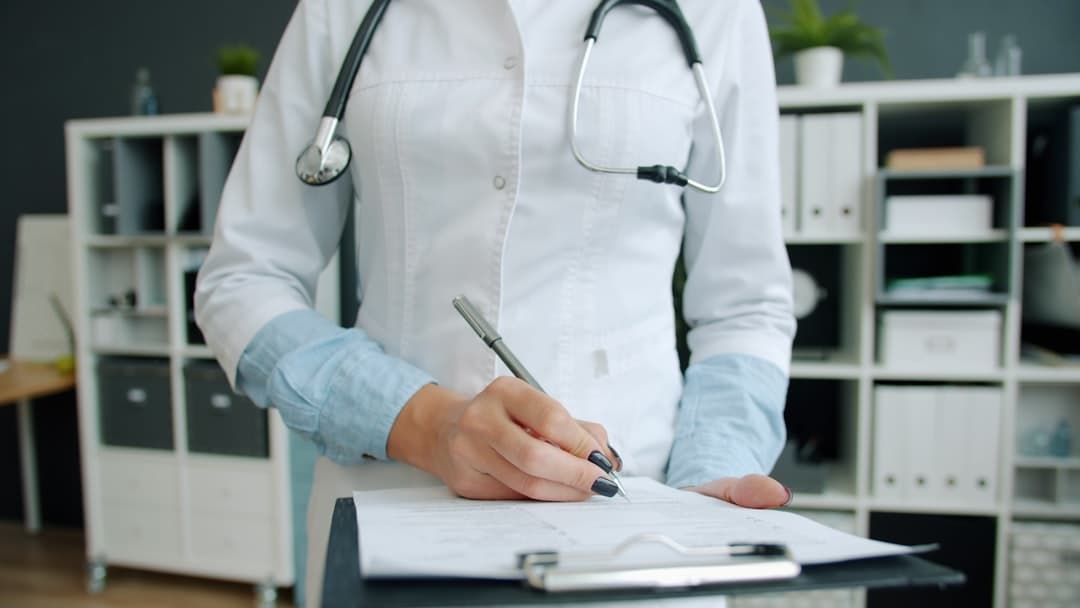
The visit your patient will read tonight
Under the US 21st Century Cures Act information-blocking rules (effective since 2021 and tightened through 2024), most clinical notes are released to the patient via the patient portal automatically and quickly. Your patient signs in tonight, sees the visit summary, and reads what you wrote.
In the pre-AI-scribe era, this was a workflow consideration but not a content consideration: providers wrote what they always wrote, patients saw it. With AI scribes, the content is different. Notes are often longer, more conversational in tone, and capture things the patient said that they may not have realized would be in the chart.
This article is about how AI-generated notes intersect with patient portal sharing. What patients see, what they react to, and what to edit before signing.
What's different about AI-generated notes from a patient's view
Patients reading AI-generated notes notice things they don't notice reading typed notes:
More direct quotes. The AI sometimes captures the patient's exact words. Reading "patient stated 'I just feel like nothing is working'" can land differently than reading "patient reports persistent depressive symptoms." The first is more humanizing for many patients; for some, it's surprising to see their own words in the chart.
More verbose plans. AI scribes often produce longer plan sections. Patients see a chart that looks more thorough than what they may have expected. This is usually good (patients appreciate detail) but occasionally generates portal messages ("what does all of this mean?").
More uncertainty captured. The AI captures the provider's expressed uncertainty ("I'm not sure whether this is X or Y; we'll wait and see"). Provider-typed notes often summarize this as a confident-sounding assessment. Patients reading captured uncertainty can find it reassuring or unsettling, depending on their disposition.
More social context. The AI captures family stress, work situations, financial concerns that the patient mentioned in passing. Patients sometimes don't realize how much of their context they shared during the visit. Reading it back can feel intimate or exposing.
These differences mean that AI-generated notes deserve more attention to the patient-facing version than typed notes did.
What to edit before publishing
A few categories worth specifically attending to:
Sensitive social or family context the patient may not have wanted in the chart. "Patient is upset about her sister's drug addiction" or "patient is struggling financially after husband lost job." This may have been relevant to the visit but doesn't need to be in the chart in narrative form. Condense to clinical relevance: "Patient experiencing significant psychosocial stressors."
Direct quotes that could embarrass or expose. A patient's complaint about a family member, a patient's frank disclosure about substance use, a patient's emotional reaction. Convert from quote to summary. The chart records "patient described conflict with spouse" not "patient said 'I sometimes wish I had never married him.'"
Disclosures the patient asked to keep off the record. If the patient asked you to pause the recording, or asked that something stay off the record, the AI may have captured something they wanted excluded. Verify nothing slipped in.
Clinical reasoning that was for your eyes, not the patient's. Internal differential considerations ("could be early MS, but I don't want to alarm her yet, will order MRI as 'rule out demyelinating disease' but tell her it's to check for migraine causes"). The AI may have captured this verbatim. Condense to "MRI ordered to evaluate for demyelinating versus migraine etiology" without the strategic framing.
Hedging language that the patient might misread. "Probably not cancer but I want to be sure" can read very differently to the patient. Rephrase if needed: "Imaging ordered to confirm benign etiology."
Anything you wouldn't say to the patient directly. If you said it during the visit, the patient already heard it. But if the AI captured your thinking out loud, that's different from your patient-facing speech. Edit to match what you actually communicated.
These edits don't change the clinical content; they change the patient-facing presentation. The medical record is still complete; it's just less likely to generate distress when the patient reads it.
What not to edit
Some things to leave in:
Accurate clinical assessment and plan. Patients deserve to know what you found, what you think, and what you're doing about it. Don't dilute the clinical content to avoid confronting the patient with their condition.
Diagnosis names, even when serious. The patient is going to learn the diagnosis eventually; the chart shouldn't be the source of surprise, but it also shouldn't hide what's been determined. The conversation in the room is where the diagnosis is first delivered; the chart confirms what was said.
Medication, dose, and frequency. Critical for safety. Patients reading these in the portal sometimes catch errors before pharmacists do. The transparency is protective.
Lab results and their interpretation. Patients need to see what was checked and what was found.
Follow-up plan and timeline. Patients use this to plan their lives; it must be clear.
The principle: don't edit to obscure clinical content. Edit to present clinical content in language that's appropriate for the patient's reading.
Notes you might consider not publishing
A few specific note categories where some practices delay or withhold portal publication:
Initial mental health intakes. Some practices delay these to allow a follow-up visit before the patient sees the chart, particularly when the chart includes a new diagnosis or risk assessment. This is legally permissible under Cures Act exceptions for psychotherapy notes and certain harm-prevention scenarios; check your specific obligations.
Notes documenting suspected abuse or neglect. When the patient may share the chart with a perpetrator, immediate publication can endanger them. Cures Act has provisions for delayed release in safety-protection scenarios.
Notes with new significant diagnoses. Some practices delay 24 to 48 hours so the provider can have a phone conversation with the patient before they read the chart. The delay is permissible if there's a specific safety or therapeutic rationale.
Notes with content that would substantially harm the patient or others. Cures Act has a "prevention of harm" exception. The bar is high; the exception is narrow. Don't use this broadly; it's for specific safety situations.
For routine office visits, no delay or withholding is appropriate. The default is open and timely release.
The portal message that often follows
Patients reading AI-generated notes sometimes send portal messages. The common patterns:
"What does this term mean?" The AI's note may use clinical terminology the patient doesn't understand. The response: a brief plain-English explanation. The recurrence of this question suggests editing the note to be more accessible, not just answering individually each time.
"This doesn't match what I remember from the visit." Sometimes the patient is right (the AI captured something inaccurately), sometimes the patient's memory is imperfect, sometimes both. The response: review the note. If there's an error, addendum it. If the patient's memory differs, a brief explanation may resolve.
"Why is this in my chart?" Patient may be uncomfortable with content the AI captured. The response: a thoughtful conversation about why the content was clinically relevant, with willingness to edit (via addendum) if the patient's concern is valid.
"Can you delete this?" Patients sometimes ask for content to be removed from the chart. The response: charts aren't deletable, but addenda can clarify or contextualize. Explain the process.
Portal messages from AI-generated notes tend to be more frequent than from typed notes in the first 30 days as patients adjust to the new format. The rate typically decreases as patients get used to the AI-generated note style.
The proactive communication option
Some practices have started proactively addressing the portal-reading experience:
A one-paragraph patient-facing summary at the top of each note. "Today we discussed X, found Y, and the plan is Z." The summary is patient-friendly; the rest of the note is the clinical detail. Patients read the summary; most don't read the rest.
A standard preamble explaining the AI documentation. "This note was drafted with the help of a documentation tool that captures our conversation and assists me in writing the note. I have reviewed and signed the note." Patients appreciate transparency.
A note-style preference in the patient's profile. Some patients want the verbose AI version; some want the abbreviated provider-edited version. A small minority of practices have started offering preferences.
These features are aspirational for most practices in 2026. They're worth considering as the patient-portal experience continues to mature.
The international and Canadian context
Outside the US, the patient-portal sharing rules differ:
Canada. Provincial rules vary. Ontario's PHIPA grants patients access on request but does not require automatic release. Many practices in Ontario release notes to portals voluntarily and find similar patient response patterns to the US.
EU. GDPR Article 15 grants patients access to their data on request. Many EU practices voluntarily provide portal access; the legal framework is patient-initiated rather than automatically released.
UK. NHS general practice has been moving toward automatic patient access to records (NHS App access to GP records). The patterns are similar to the US Cures Act experience.
Australia. My Health Record framework allows patients to see most chart content. Patterns are similar.
In all jurisdictions, the principle holds: AI-generated notes that patients can read warrant more attention to the patient-facing presentation than typed notes did.
The honest framing
AI-generated notes shared via patient portal are mostly a positive development. Patients have more access, providers have more transparency, and the workflow is now better aligned with patient expectations.
The small adjustment for AI-generated notes is in the editing pass. A few extra seconds per note to verify that what the AI captured is appropriate for what the patient will see. Most providers settle into this habit within a few weeks; it adds modest time to the review process and substantially improves the patient experience.
The practices that have not made this adjustment sometimes get portal-message overload in the first months of AI scribe rollout. The practices that have made it generate notes that patients read calmly, with the chart serving its dual role as clinical record and patient communication.
For the related question of when to share notes versus withhold (Cures Act exceptions), see what your malpractice carrier actually says about AI-generated notes. For the broader patient-relationship considerations, talking to patients about AI scribes covers the consent conversation.
Related Articles
You Signed an AI-Generated Note With an Error: The Recovery Playbook
A step-by-step playbook for what to do when you discover an error in a signed AI-generated clinical note, covering chart correction, patient communication, and risk management.
clinical-documentationAI Scribe in Dermatology and Procedure-Heavy Specialties
How AI medical scribes fit into dermatology, ophthalmology, urology, and other procedure-heavy specialties where office visits and procedure documentation overlap.
clinical-documentationAI Scribe for Nurse Practitioners and Physician Assistants
How AI medical scribes fit into NP and PA practice patterns, including supervisory note workflows, prescribing documentation, and the scope-of-practice nuances that affect note structure.
Ready to Try AI-Powered Documentation?
Join thousands of healthcare providers saving hours every day with Transcribe Health.
Start Free Trial