AI Medical Scribe for Dentistry and Oral Surgery
Dental documentation involves tooth-specific findings, treatment plans and procedure notes. Here's how AI scribes handle dental charting.

By Fatih Aktas, Founder & CEO
Published
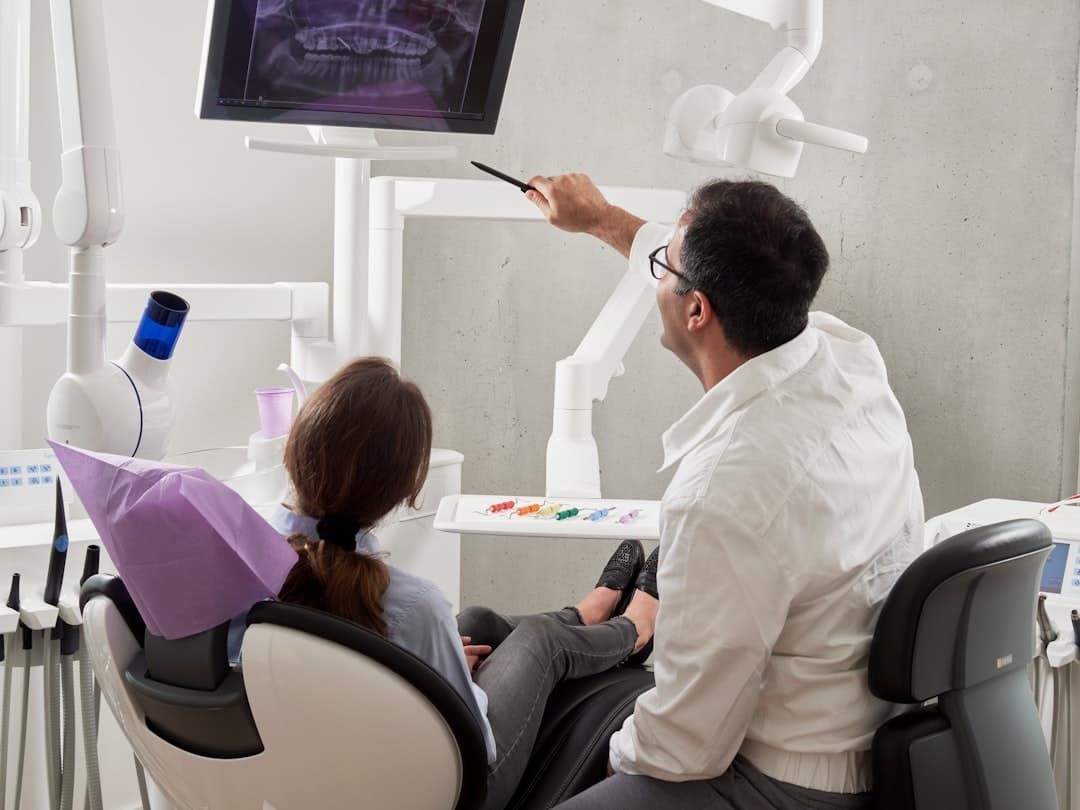
Dental documentation is well-suited for AI assistance
Dentists document differently from physicians. The documentation revolves around individual teeth, periodontal measurements and procedure-specific details that have their own shorthand and conventions. Universal numbering, surface notation, periodontal charting - all documentation elements that don't exist in medical practice.
Despite these differences, the core problem is the same. Dentists spend too much time typing and not enough time with patients. A general dentist seeing 20-30 patients daily generates documentation for each encounter while also managing treatment plans that span multiple visits.
Oral surgeons face an even more acute documentation burden. Complex extraction notes, implant procedure documentation and post-operative assessments require detailed records that take time to create. When you're performing 8-12 surgical procedures a day, the charting adds up fast.
AI scribes adapted for dentistry and oral surgery can capture clinical findings and procedure details as the practitioner speaks, eliminating the keyboard time that slows down dental workflows.
How dental documentation differs
Several aspects of dental documentation set it apart from medical documentation.
Tooth-specific notation: Every finding, treatment and plan references specific teeth using numbering systems (Universal, FDI). The AI must accurately capture tooth numbers and associate findings with the correct tooth. "Number 19 has a mesial-occlusal carious lesion" contains three specific data points: tooth number, surfaces involved and the finding.
Surface notation: Dental surfaces (mesial, distal, occlusal, buccal, lingual) create a coding language specific to dentistry. AI scribes need to recognize these terms and their abbreviations (MOD, DO, BL) and use them correctly in documentation.
Periodontal measurements: Probing depths, bleeding on probing, clinical attachment levels and recession measurements create data-dense documentation. A full periodontal charting involves 6 measurements per tooth across 28-32 teeth. While the actual measurement recording typically happens through specialized software, the AI can capture clinical commentary about periodontal findings.
CDT coding: Dentistry uses Current Dental Terminology (CDT) codes rather than CPT codes. AI scribes for dental practices should understand CDT code categories and generate documentation that supports appropriate code selection.
Treatment planning across visits: Dental treatment plans often span multiple appointments. A full-mouth rehabilitation might involve 8-10 separate visits. Documentation at each visit needs to reference the overall treatment plan and note progress toward completion.
General dentistry documentation
Examination documentation
Comprehensive and periodic exams generate documentation including:
- Hard tissue findings (caries, fractures, wear patterns, existing restorations)
- Soft tissue assessment (oral cancer screening, mucosa evaluation)
- Periodontal assessment (probing depths, bleeding, mobility)
- Occlusal analysis
- Radiographic findings
- Treatment plan presentation and patient acceptance
AI scribes capture these findings when the dentist verbalizes them during the exam. "Tooth 14 has a fractured mesiolingual cusp with recurrent decay under the existing amalgam" becomes structured documentation with the correct tooth number, finding type and clinical details.
Restorative procedure notes
For common procedures like fillings, crowns and bridges, the AI documents:
- Pre-operative diagnosis and tooth number
- Anesthesia type, amount and location
- Isolation method (rubber dam, cotton rolls)
- Preparation description
- Material used with shade selection
- Occlusal adjustment
- Post-operative instructions
Hygiene visit documentation
Dental hygienists generate substantial documentation during prophylaxis and scaling appointments. AI scribes can capture:
- Periodontal assessment findings
- Type of cleaning performed (prophylaxis, scaling and root planing)
- Instrumentation details
- Patient education provided
- Home care recommendations
- Recall interval recommendation
Oral surgery documentation
Oral surgery documentation is more procedure-intensive and shares characteristics with medical surgical documentation.
Extraction documentation
From simple extractions to full bony impactions, the documentation includes:
- Indication for extraction with relevant clinical and radiographic findings
- Anesthesia type and technique (local, IV sedation, general anesthesia)
- Surgical technique (elevation, sectioning, bone removal if needed)
- Description of root anatomy and any complications
- Socket management (irrigation, grafting, membrane placement)
- Suture type and technique
- Post-operative instructions and prescriptions
Implant documentation
Implant placement generates detailed documentation:
- Pre-operative assessment including bone quality and available dimensions
- Surgical guide usage and implant planning correlation
- Flap design and tissue management
- Osteotomy preparation details (drill sequence, speed, depth)
- Implant specifications (manufacturer, size, platform, torque value)
- Primary stability assessment
- Closure technique and healing protocol
- Post-operative imaging documentation
Biopsy and pathology documentation
Oral pathology requires:
- Clinical description of the lesion (size, color, texture, location, duration)
- Biopsy technique (incisional, excisional, punch)
- Specimen handling and laboratory requisition
- Differential diagnosis
- Follow-up plan pending pathology results
Sedation and anesthesia documentation
Many dental and oral surgery procedures involve sedation. Documentation requirements include:
- Pre-sedation assessment (ASA classification, medical history review, NPO status)
- Informed consent for sedation
- Monitoring records (vital signs at regular intervals)
- Medications administered with times and doses
- Recovery assessment and discharge criteria met
- Post-sedation instructions
AI scribes can capture this documentation when the practitioner and team verbalize these elements during the procedure, creating a contemporaneous record that meets regulatory requirements.
Choosing an AI scribe for dental practice
Dental professionals evaluating AI scribes should focus on:
- Dental terminology comprehension - tooth numbering, surface notation and dental-specific vocabulary
- CDT code awareness - documentation that supports dental billing codes
- Procedure template support - common procedures should have structured documentation frameworks
- Speed for high-volume practices - notes generated fast enough for 20-30 daily patients
- Integration with dental practice management software - compatibility with systems like Dentrix, Eaglesoft or Open Dental
Transcribe Health supports dental and oral surgery documentation with specialty-specific AI that understands tooth-level documentation, dental terminology and the procedural documentation patterns unique to dental practice.
Related Articles
Documenting GLP-1 and Weight-Management Visits With an AI Scribe
GLP-1 prescribing has reshaped primary care visits. Here is how an AI scribe captures the dosing, monitoring, side effects, and prior-authorization detail these encounters demand.
Clinical WorkflowsAI Medical Scribe for IVF and Fertility Clinics
IVF documentation is complex, time-sensitive, and detail-critical. Learn how AI scribes handle cycle monitoring, egg retrieval notes, embryo transfer documentation, and fertility-specific workflows.
Clinical WorkflowsAI Medical Scribe for Allergy and Immunology Practices
Allergy and immunology documentation involves complex testing protocols, immunotherapy tracking, and detailed reaction histories. See how AI scribes streamline it all.
Related Resources
Ready to Try AI-Powered Documentation?
Join thousands of healthcare providers saving hours every day with Transcribe Health.
Start Free Trial