AI Scribe for General Surgery
Transcribe Health drafts your consult, pre-op, and post-op notes while you see the patient, so the clinical detail is on the page before you move to the next room.
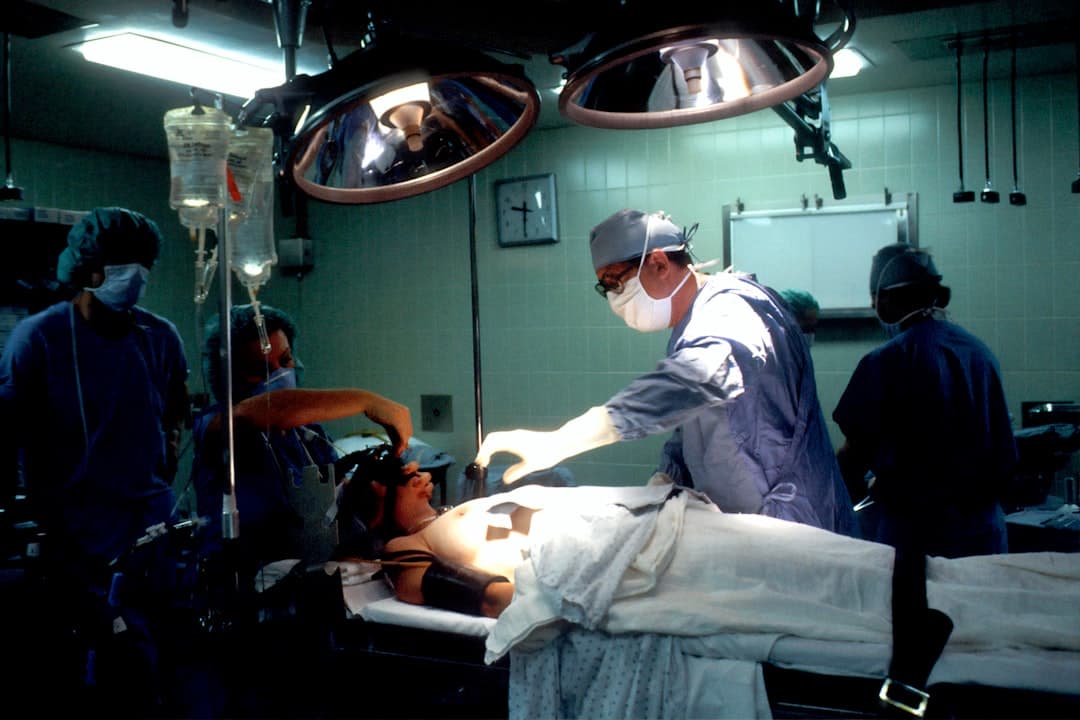
Photo: National Cancer Institute / Unsplash
General surgery documentation, from office to OR
General surgery is a clinic problem as much as an operating room one. A single day can run from a new consult for gallstones or a hernia, to a pre-op history and physical, to a post-op wound check on someone you operated on last week. Each of those is a different note. The consult needs the referring question, the exam, and the imaging you read. The pre-op H&P needs the risk assessment. The post-op check needs the wound, the pathology, and what happens next.
The detail matters and it is easy to lose. A cholecystitis consult touches the history, the right upper quadrant exam, the ultrasound findings, and your plan for a laparoscopic cholecystectomy, and every piece has to be in the note for the referral, the pre-authorization, and the coding. Done by hand, that is charting between patients or finishing the day's notes after clinic closes.
Transcribe Health listens to the visit, or to your narration after a case, and drafts a note that puts the surgical detail where it belongs: the indication, the exam, the operative findings, drain and wound status, and the reasoning behind your plan. You read it and sign. It does not replace the operative record system your OR runs on, and nothing is filed without you.
Documentation Challenges in General Surgery
- 1
Moving between office consults, pre-op history and physicals, and post-op checks in the same clinic day, each with a different note structure and level of detail
- 2
Writing operative and procedure notes that carry the indication, findings, and technique billing and audit review expect
- 3
Keeping documentation consistent when your day is split across the office, the pre-admission clinic, and the OR
How Transcribe Health Helps General Surgery
Consult and Referral Notes
Drafts the new-consult note from the visit, with the referring question, exam, imaging you reviewed, and your recommendation.
Pre-op H&P and Post-op Checks
Writes up the history and physical before surgery and the wound and recovery check after it, in the format each visit needs.
Operative and Procedure Notes
Turns your post-procedure narration into a structured note with the indication, findings, and technique. It supports your record, not the operative system of record.
A surgical consult, captured in real time
An abridged new consult for symptomatic gallstones, drafted the way you would see it before signing.
44-year-old woman referred for recurrent right upper quadrant pain. Reports three episodes over the past two months, each after a fatty meal, lasting two to four hours with radiation to the right scapula and associated nausea. No fever, no jaundice, no change in stool or urine color. Last episode four days ago resolved on its own. No prior abdominal surgery. No alcohol use.
Afebrile, BP 126/78, HR 72. Abdomen soft, mildly tender in the right upper quadrant, negative Murphy sign today. No guarding or rebound, no palpable mass, no jaundice. Right upper quadrant ultrasound from the referring office: multiple gallstones, gallbladder wall 2 mm, no pericholecystic fluid, common bile duct 4 mm. WBC 7.2, total bilirubin 0.6, ALT and AST within normal limits, lipase normal.
44-year-old woman with symptomatic cholelithiasis and biliary colic. No current signs of acute cholecystitis, choledocholithiasis, or pancreatitis. A good candidate for elective laparoscopic cholecystectomy.
Reviewed the diagnosis, the option of elective laparoscopic cholecystectomy, and the small chance of conversion to an open procedure. Discussed risks including bleeding, infection, bile duct injury, and bile leak. Patient wishes to proceed. Schedule elective laparoscopic cholecystectomy. Pre-op labs and anesthesia clearance ordered. She will call for worsening pain, fever, or jaundice in the meantime, and was given return precautions for the emergency department. Follow up two weeks after surgery.
Illustrative example. Not a real patient encounter.
Built for general surgery coding and your EMR
Notes capture the history, the exam, the data you reviewed, and the risk that back up your E/M level and a procedure's medical necessity. That is the detail auditors look for, and the first thing to slip when charting is rushed between the office and the OR.
- 99204 / 99205New-patient office consult, moderate to high complexity
- 99214 / 99215Established-patient follow-up, moderate to high complexity
- 47562Laparoscopic cholecystectomy
- 49505Open repair of initial inguinal hernia, age 5 or older
- 44970Laparoscopic appendectomy
- 49585Repair of umbilical hernia, age 5 or older, reducible
- K80.20Calculus of gallbladder without cholecystitis, without obstruction
- K40.90Unilateral inguinal hernia, without obstruction or gangrene
- K35.80Unspecified acute appendicitis
- K57.30Diverticulosis of large intestine without perforation or abscess, without bleeding
- K42.9Umbilical hernia without obstruction or gangrene
Fits the workflow you already have
Drafts drop into the major EMRs surgical groups run on: Epic, Oracle Health (Cerner), and athenahealth. You get whatever note type you are working in, a consult, a pre-op H&P, a post-op check, or a procedure note from your narration. It writes up the exam and the imaging findings you dictate. It does not read images and it is not your operative record system. You make the call and it records it.
What's Happening in General Surgery
Joint Commission Mandates Operative Reports Immediately After Surgery
Operative reports must be written or dictated immediately after surgery, defined as before patient transfer to next level of care. CMS-compliant notes require primary surgeon identification, pre-operative diagnosis, and full narrative procedure description.
AI transcription can capture operative details in real-time or immediately post-procedure, ensuring compliance with the immediate completion mandate without delaying the surgeon.
Read moreNew 2025-2026 CPT Codes for Gastric, Vascular, and Thoracic Procedures
New CPT codes cover gastric restrictive procedures, vascular procedures, and thoracic aorta repair. Surgeons must now document in-situ measurements in operative reports for procedures involving tumors or cysts measured during surgery.
New procedure codes require specific documentation elements like measurements and techniques. AI transcription with specialty-aware context ensures these required data points are captured.
Read moreGeneral surgery AI scribe questions
Does it understand surgical terminology?
Can it handle consults, pre-op, and post-op, or only one type of visit?
Does it replace our operative report system?
How is patient information protected?
Will it help with coding and audit defensibility?
Ready to Transform Your Documentation?
Join thousands of healthcare providers who save hours every day with AI-powered medical transcription.
Start Free Trial